
Im Versuchsbetrieb einer kleinen Zweiwalzen-Offenwalzwerk, Das Geschwindigkeitsverhältnis zwischen der vorderen und der hinteren Walze, die Temperatureinstellung und der Walzenspalt sind drei Prozessfaktoren, die die Mischqualität beeinflussen. Diese Parameter wirken sich auf die Scherfestigkeit, die Gleichmäßigkeit der Dispersion, das Walzenwickelverhalten und die thermische Entwicklung des Materials aus, was sich letztlich auf die Leistung der Gummimischung oder des Verbundmaterials auswirkt.
Drei Schlüsselparameter eines Zweiwalzen-Offenwalzwerk: Geschwindigkeitsverhältnis, Temperatur und Walzenspalt im Detail erklärt.
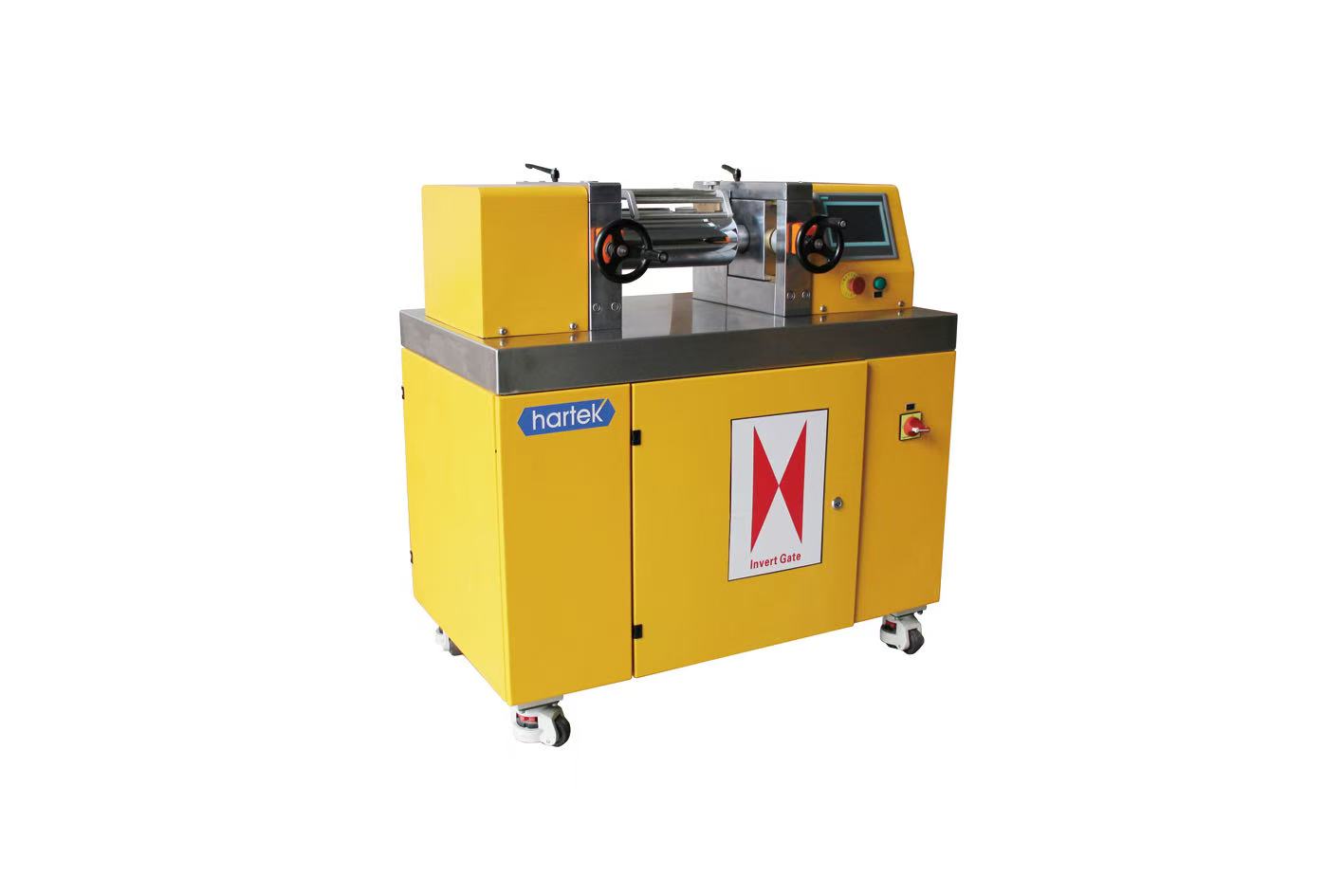
I. Die Rolle des Geschwindigkeitsverhältnisses
Die vorderen und hinteren Walzen eines Zweiwalzengerüsts drehen sich in der Regel mit unterschiedlichen Geschwindigkeiten, wodurch ein Geschwindigkeitsverhältnis entsteht. Übliche Verhältnisse sind 1:1,1 und 1:1,2. Dieses Geschwindigkeitsverhältnis erzeugt einen Geschwindigkeitsgradienten im Walzenspaltbereich, der ein Scherströmungsfeld erzeugt.
*Wenn das Geschwindigkeitsverhältnis zu klein ist, etwa 1:1, ist die Scherkraft schwach, was das Aufbrechen von Materialagglomeraten erschwert und zu einer schlechten Dispersion des Füllstoffs führt.
*Wenn das Geschwindigkeitsverhältnis zu groß ist, z. B. über 1:1,4, kann eine übermäßige Scherung zu örtlicher Überhitzung und zur Beschädigung von wärmeempfindlichen Materialien führen.
*Empfohlen für den allgemeinen Gebrauch: Bei der Mischung von Naturkautschuk wird üblicherweise ein Geschwindigkeitsverhältnis von 1:1,1-1:1,2 verwendet; bei hochgefüllten Systemen kann es zur Verbesserung der Füllstoffdispersion auf 1:1,25 erhöht werden.
Das Geschwindigkeitsverhältnis wirkt sich auch auf die Tendenz zur Beschichtung der Walzen aus. Im Allgemeinen neigt Rohgummi eher dazu, die langsameren Walzen zu beschichten; daher wird die hintere Walze oft als langsamere Walze eingestellt, um dem Bediener das Abklopfen und Nachbearbeiten zu erleichtern.
II. Auswirkungen der Temperatureinstellung
Die vordere und die hintere Walze können unabhängig voneinander temperaturgesteuert werden, und die Strategie der Temperaturverteilung muss je nach Materialeigenschaften angepasst werden:
- Gleiche Temperatureinstellung (die Temperaturen der vorderen und hinteren Walze sind gleich): Geeignet für Materialien mit guter thermischer Stabilität und einem breiten Verarbeitungsfenster, wie z. B. SBR;
- Die Temperatur der vorderen Walze ist höher als die der hinteren Walze: Hilft der Schmelze, ihre Fließfähigkeit während der Verarbeitung aufrechtzuerhalten, wodurch die Oberflächenrauheit verringert wird; wird häufig bei der Verarbeitung von thermoplastischen Elastomeren (TPE/TPU) verwendet;
- Die Temperatur der hinteren Walze ist höher als die der vorderen Walze: Verbessert die Beschichtung des Rohgummis auf der hinteren Walze und erleichtert die Pulverabsorption; wird häufig in der ersten Mischphase von Naturkautschuk oder EPDM verwendet.
Im Allgemeinen wird die Mischtemperatur für Gummi auf 40-70℃ geregelt, während für thermoplastische Materialien (wie TPU) 80-120℃ erforderlich sein können. Eine zu hohe Temperatur kann leicht zum Anbrennen oder zur Zersetzung des Materials führen, während eine zu niedrige Temperatur die Fließfähigkeit des Materials verringert und die Pulveraufnahme erschwert.
III. Bedeutung der Walzenspaltverstellung
Der Walzenspalt ist der Mindestabstand zwischen den Oberflächen zweier Walzen und bestimmt direkt die Scherfestigkeit und die Verweilzeit des Materials:
*Kleiner Walzenspalt (z. B. 0,5-1 mm): Hohe Scherkraft, vorteilhaft für die Dispersion des Füllstoffs, führt aber zu dünneren, leichter zu brechenden Platten und höherer Motorbelastung;
*Großer Walzenspalt (z. B. 2-3 mm): Schwache Scherung, geeignet zum Plastifizieren oder Vormischen, erzeugt dickere Platten und erleichtert die nachfolgenden Arbeitsgänge;
*Typischer Prozess: Zunächst wird ein großer Walzenspalt für die Pulvermischung verwendet, dann wird der Walzenspalt für die Veredelung allmählich verringert und schließlich auf die Zielstärke für die Plattenproduktion eingestellt.
Der Walzenspalt beeinflusst auch die Menge des angesammelten Klebstoffs. Ein angemessener Klebstoffstau (oberhalb des Walzenspaltes) trägt zur Bildung einer stabilen Mischzone bei, ein zu großer Stau kann jedoch zu einer schlechten Wärmeableitung oder einer lokalen Übermischung führen.
IV. Parameterkoordinierung und Materialanpassung
Die drei oben genannten Parameter müssen synergetisch angepasst werden. Zum Beispiel:
- Beim Compoundieren von hochgefüllten Calciumcarbonat/PP-Systemen: Verwenden Sie ein höheres Geschwindigkeitsverhältnis (1:1,25), eine mittlere Temperatur (80℃) und verringern Sie den Walzenspalt schrittweise;
- Bei der Plastifizierung von geräuchertem Naturkautschuk: Beginnen Sie mit einem niedrigen Geschwindigkeitsverhältnis (1:1,1), niedriger Temperatur (50℃) und einem großen Walzenspalt;
- Bei der Verarbeitung von TPU: Die vordere Walze sollte etwas höher sein als die hintere (z. B. 90/80), mit einem Geschwindigkeitsverhältnis von 1:1,15, um ein Verkleben der Walzen zu vermeiden.
Die Bediener sollten die Parameterkombinationen dynamisch optimieren, indem sie visuelle Phänomene wie den Zustand der Walzenumhüllung, die Morphologie des angesammelten Gummis und die Oberflächenbeschaffenheit der Platte in Verbindung mit Drehmoment oder taktilem Feedback beobachten.

 German
  English
  Arabic
  Spanish
  French
  Russian