
¿Alguna vez te has enfrentado a este frustrante problema?
¿Ha comprado las mejores máquinas, ha utilizado fórmulas secretas, pero las películas extruidas están llenas de ojos de pez, tienen un espesor desigual o se deterioran y decoloran inexplicablemente? ¡Los residuos se acumulan y sus ganancias se desperdician prácticamente!
Oye, deja de culpar a las materias primas y deja de despedir a tus técnicos.
Hoy voy a descubrir el “asesino oculto” que se esconde dentro del extrusor: el sistema de enfriamiento. Elegir el método de enfriamiento adecuado liberará todo el potencial de tu máquina, permitiéndole rendir al máximo. Elegir el método incorrecto solo la convertirá en un monstruo devorador de dinero.
Si quieres sobrevivir y triunfar en este sector tan competitivo, debes dominar el arte de la “refrigeración y calefacción”.”
Paso 1: Comprender los dos métodos de enfriamiento más comunes: evite que lo engañen
En lo que respecta a los métodos de refrigeración, solo hay dos tipos principales en el mercado: “refrigeración por aire” y “refrigeración por agua”. No existe una solución absolutamente “óptima”, solo la “solución más adecuada para su negocio”.”
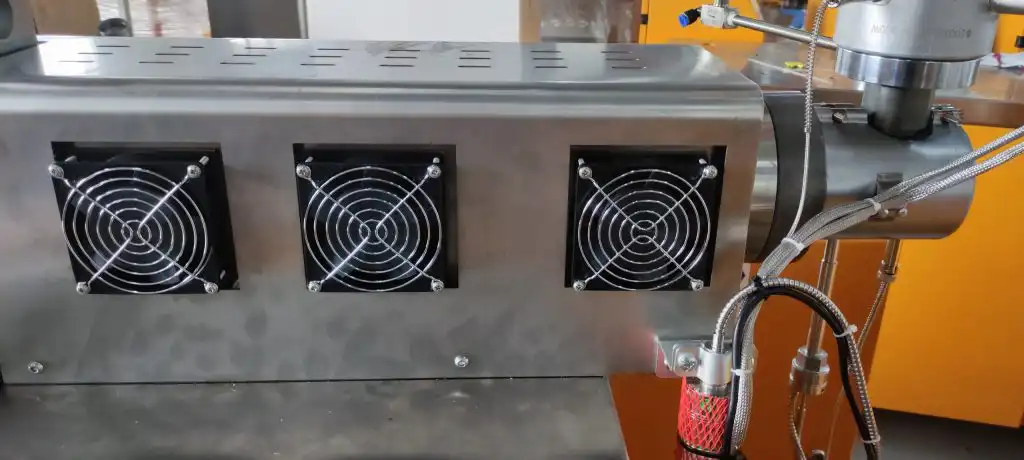
“Refrigerado por aire”: una solución “tradicional” económica y fácil de mantener.
Piensa en ello como un “secado al aire”. Utiliza un ventilador para expulsar el calor del tanque.
Ventajas principales: Precio bajo, robusto y duradero, bajos costos de mantenimiento.
- No es necesario construir torres de enfriamiento ni instalar tuberías; ni siquiera se necesitan equipos de tratamiento de agua.
- El mantenimiento es extremadamente sencillo: basta con limpiar el polvo. No hay que preocuparse por las heladas en invierno, el óxido en verano ni las fugas.
Escenarios adecuados:
- Equipo de laboratorio/muestreo: Para aplicaciones de bajo volumen, como I+D y pruebas, la refrigeración por aire es perfectamente adecuada.
- Materiales sensibles al calor (por ejemplo, PVC): Estos materiales son delicados y se dañan fácilmente, son sensibles tanto al frío como al calor. El enfriamiento por aire es suave y no provoca que se “enfríen” y se descompongan.
- Pequeñas empresas/empresas emergentes: cada centavo invertido en el equipo es crucial. Recuperar los costos es fundamental.
“Refrigerado por agua”: la “fuerza dominante” estable y de alto rendimiento.”
Se puede entender como “refrigerado por hielo”. Logra la disipación forzada del calor a través de una “camisa” que hace circular agua alrededor del cilindro.
Ventajas principales: enfriamiento rápido, control preciso, rendimiento de alta gama.
- El agua tiene una capacidad calorífica específica muy alta. Su eficiencia en la disipación del calor es mucho mayor que la del aire.
- Puede controlar la temperatura con precisión, logrando una exactitud extremadamente alta y fluctuaciones mínimas.
Estudios de casos:
- Grandes fábricas/funcionamiento ininterrumpido: las máquinas grandes generan enormes cantidades de calor. La refrigeración por aire simplemente no puede suprimir el calor; se necesita refrigeración por agua para “suprimir físicamente” el calor.
- Materiales de alta dificultad (por ejemplo, nylon PA, PET): Estos materiales tienen temperaturas de procesamiento y calor de cizallamiento muy elevados. Si la temperatura no se controla estrictamente, el producto se echará a perder sin duda alguna.
- En busca de la máxima calidad: si produce envases asépticos o películas ópticas de alta gama, en los que ni siquiera un solo ojo de pez es aceptable, el control preciso de la refrigeración por agua mejorará significativamente el rendimiento de su producto.
Paso dos: Datos poco conocidos
Si crees que enfriar es simplemente enfriar el “cilindro”, entonces solo estás viendo la superficie.
Los verdaderos líderes del sector siempre se centran en un aspecto más oculto a la hora de elegir las configuraciones: la refrigeración interna por tornillos (refrigeración del núcleo).
La lógica es sencilla: si la temperatura interna del cuerpo humano es muy alta (calor por cizallamiento), entonces soplar con un ventilador en el exterior (enfriamiento superficial) es inútil.
- Problema: El plástico genera un “calor por cizallamiento” extremadamente alto cuando se comprime y se frota dentro del tornillo. Si este calor no se disipa del interior del tornillo, la temperatura de la superficie puede parecer normal, pero el material interno está a punto de entrar en combustión.
- Estrategia ganadora: si procesa materiales de alta viscosidad o busca obtener el máximo rendimiento, es imprescindible contar con una configuración de enfriamiento interno del tornillo. Se trata del “botón nuclear” para aumentar la productividad. Permite que su máquina funcione a altas velocidades sin dañar el material.
Consejo final:
¡Deja de tomar decisiones impulsivamente en la sala de juntas! Saca tus libros y considera estas dos opciones:
Si usted es una empresa “conservadora y con ánimo de lucro”: Produce principalmente bolsas de la compra normales, tubos de PVC o dispone de fondos limitados.
Opción preferida: sistema refrigerado por aire. No solo ahorrará en costos de equipo, sino también en décadas de molestias de mantenimiento, facturas de agua y estrés. Si es un líder del sector o un experto en tecnología: se centra en películas y materiales de barrera de alta gama, o está montando una línea de producción totalmente automatizada que funciona las 24 horas del día, los 7 días de la semana.
Opción preferida: sistema de refrigeración por agua (o incluso por aceite). No se trata de un gasto, sino de una inversión. El control preciso de la temperatura protege sus ganancias. ¡Cada reducción de 1% en la tasa de desechos se traduce en ganancias puras!
 Spanish
  English
  Arabic
  German
  French
  Russian