
In the food packaging industry, cast film is highly favored for its excellent barrier properties, transparency, and heat-sealing performance.
Choosing the right laboratory casting film machine is crucial for developing innovative packaging materials and optimizing production processes. Below is a comprehensive selection guide for laboratory casting film machines, tailored to the specific needs of the food packaging industry.
I. Clarifying the Special Requirements of Food Packaging for Cast Film
Food packaging materials must meet the following core requirements, which directly determine the selection direction of the cast film machine:
- Reliable barrier protection: Effectively blocks oxygen, moisture, and light, extending the shelf life of food.
- Strict contact safety: Materials and production processes must comply with food-grade regulations to ensure no migration of harmful substances and guarantee food contact safety.
- Stable processing and display performance: It must possess good heat-sealing performance to adapt to high-speed packaging, high transparency to enhance product display, and excellent mechanical properties to ensure the integrity of the packaging during transportation and storage.
II. Basic Types of Laboratory Cast Film Machines
Based on research and development objectives, laboratory cast film machines are mainly divided into two categories:
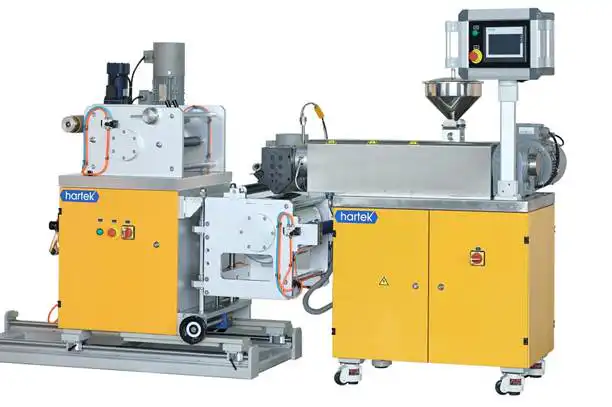
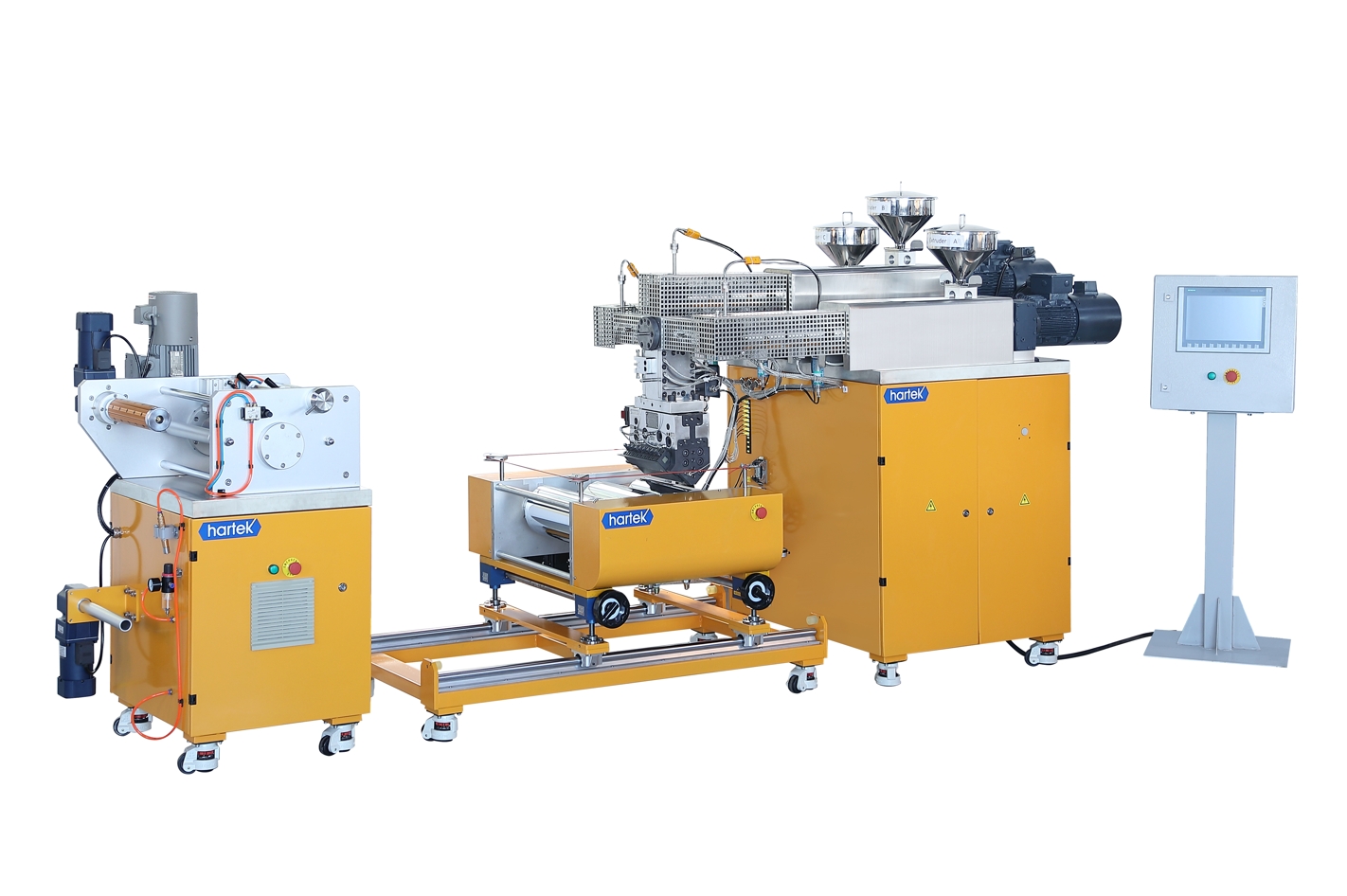
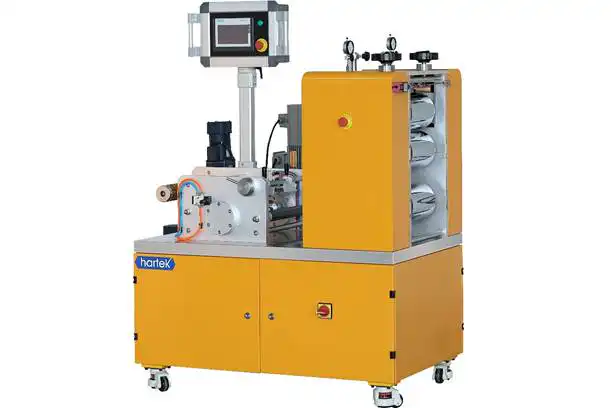
- Single-layer cast film machine: Composed of a single small extruder and a small casting machine, it has a compact structure, is easy to operate, and is very suitable for performance testing of basic materials, initial screening of formulations, and basic process research.
- Multilayer co-extrusion cast film experimental line: Composed of several small extruders and small casting machines, it can prepare two-layer, three-layer, five-layer or even seven-layer multi-structure cast films, which are suitable for developing food packaging materials with multi-layer barrier functions.
III. Key Selection Parameters Explained
- Screw Extrusion System: The Core of Plasticization and Mixing
- Screw Diameter and L/D Ratio (L/D): 20-30mm screws are commonly used in laboratories. Higher L/D ratios (e.g., 28:1 to 40:1) provide more thorough melting, mixing, and homogenization, which is especially important for formulations containing additives or masterbatches.
- Speed and Control: Laboratory casting machines typically operate at speeds of 0-120 rpm. A wide and stable speed range helps accommodate the processing needs of materials with different rheological properties, ranging from polyethylene (PE) to polyamide (PA).
- Die and Cooling System: The Key to Film Forming Quality
- Die: A width of 200-300mm is recommended. A quick-change die design is suggested to accommodate experimental requirements of varying widths.
- Cooling Rollers: An efficient cooling system can quickly and uniformly cool the film, helping to reduce internal stress and improve film transparency and surface quality.
- Control System: The Foundation of Precision and Stability
- Temperature Control Accuracy: The control accuracy of each temperature zone should reach ±1°C, as many food packaging materials are temperature-sensitive, and temperature fluctuations may lead to material degradation or performance changes.
- Drive and Tension Control: A servo motor-driven traction and winding system, combined with precise tension control, is the core to ensure uniform film thickness and smooth winding, directly determining the reliability and repeatability of experimental data.
IV. Special Considerations for the Food Packaging Industry
- Hygiene and Safety Design: All parts in contact with materials should be made of high-specification stainless steel, with a structural design free of dead corners, easy to clean and maintain, ensuring the compliance and safety of research materials from a hardware foundation.
- Multifunctionality Requirements: Ensure the equipment can handle a wide range of food packaging materials such as PE, PP, PA, and PET. Simultaneously, support the addition of color masterbatches or functional masterbatches, greatly expanding your research and development scope in the field of sustainable and functional packaging.
- Data Acquisition Function: Laboratory equipment should have comprehensive data acquisition capabilities, capable of recording key parameters such as temperature, pressure, and speed in real time. This helps researchers analyze material properties, grounding R&D decisions in solid data and accelerating the innovation cycle.
 English
  Arabic
  German
  Spanish
  French
  Russian