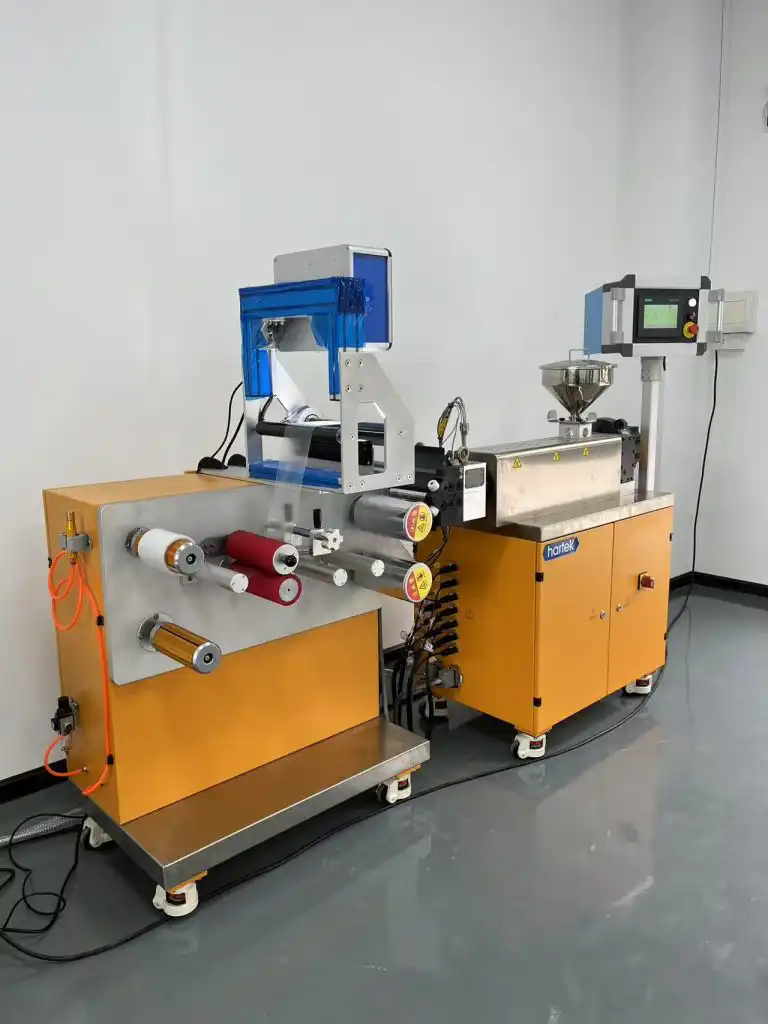
Product Introduction

Product Introduction

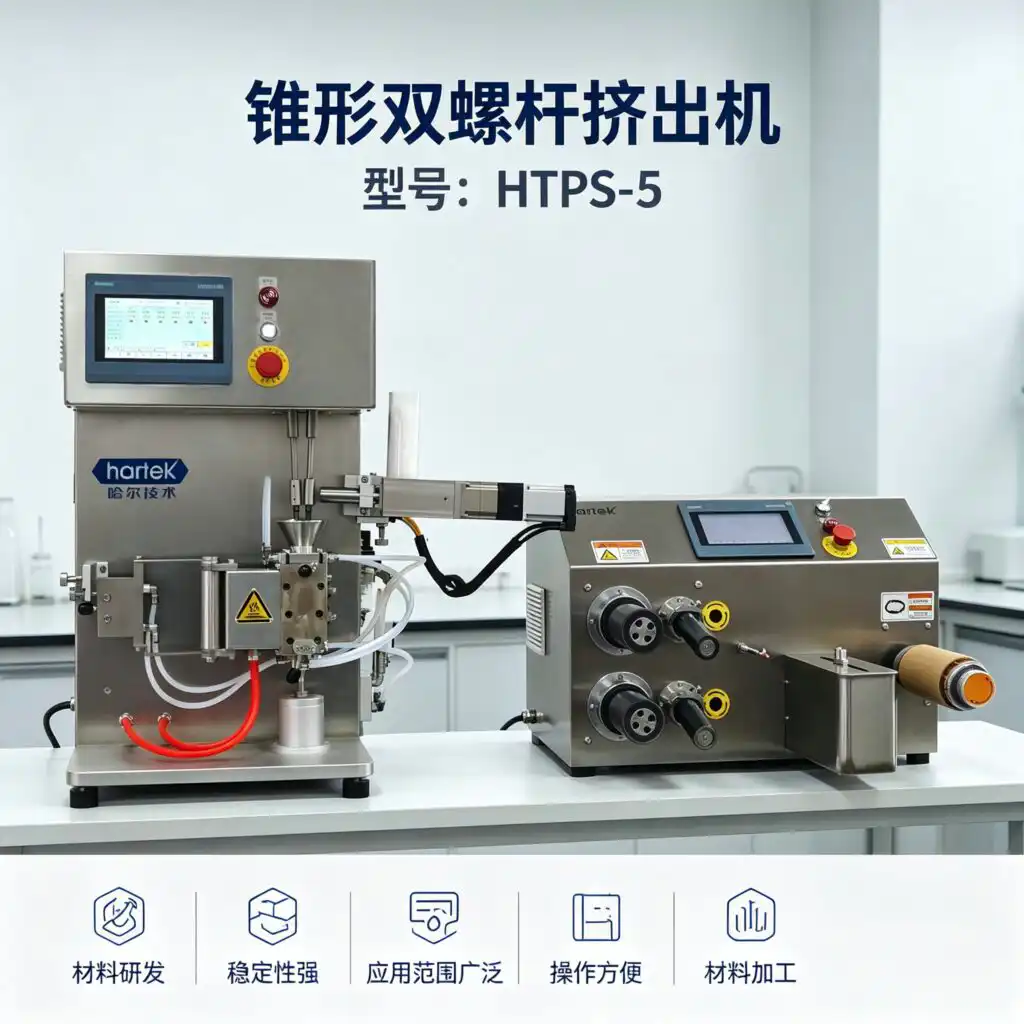
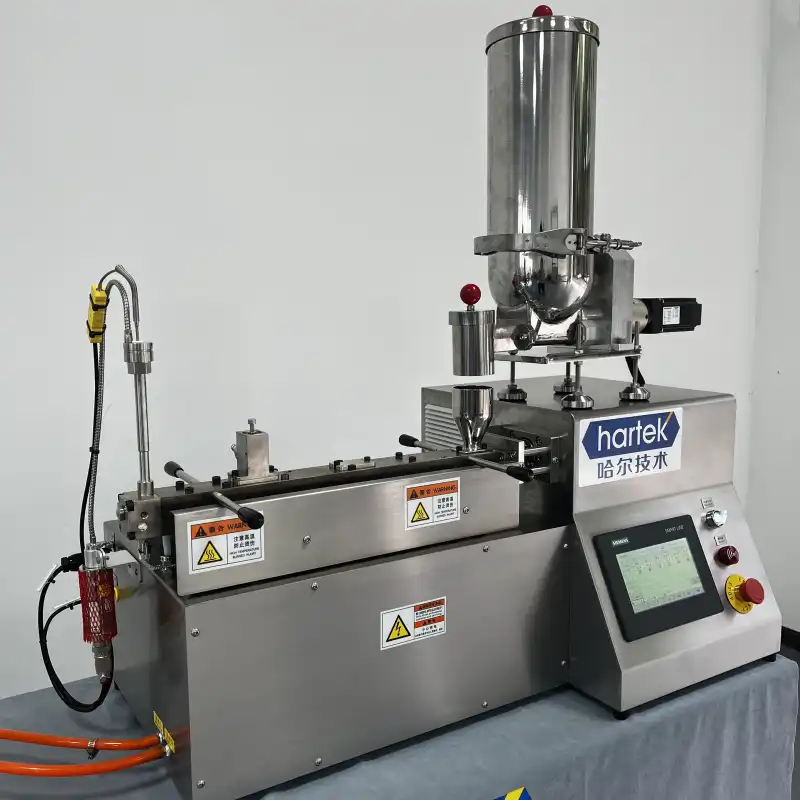
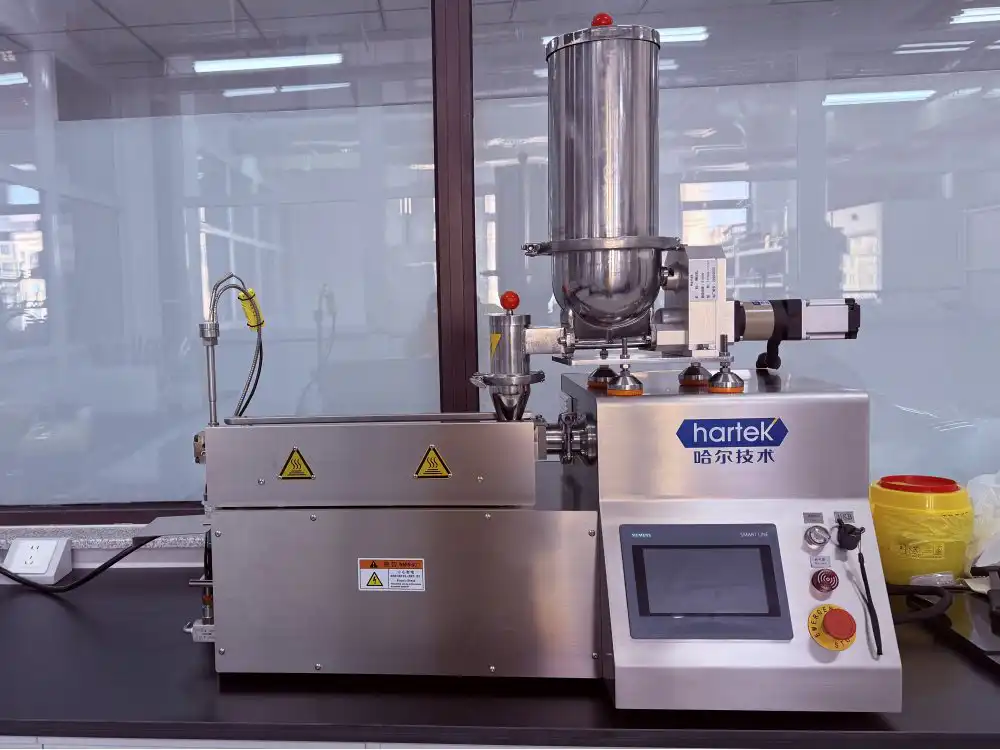
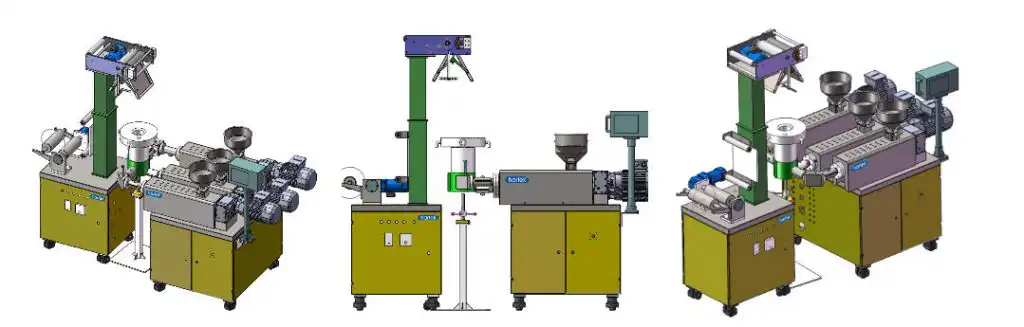
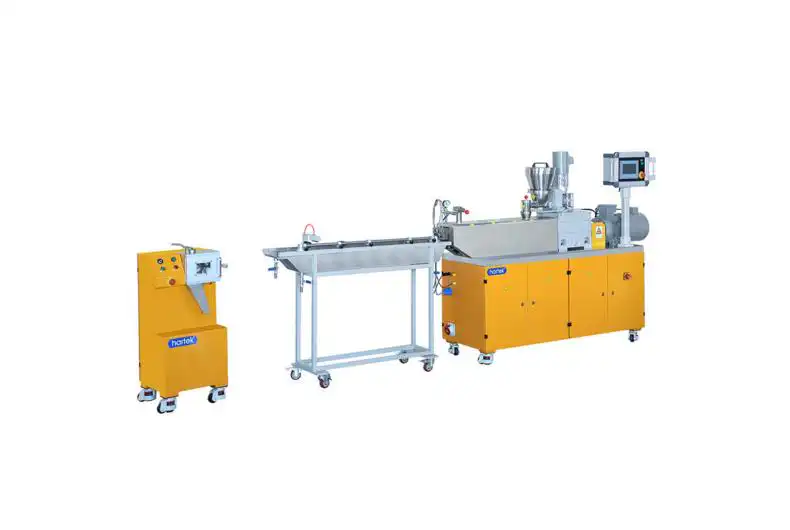
desktop twin-screw extruders

Comprehensive Analysis of Extruders

Comprehensive Analysis of Extruders: Working Principle, Classification, Structure, Application Industries, and Selection Guidelines An extruder, fully known as a screw-type plastics extruder, is the core primary equipment in the field of polymer material processing. It is often hailed as the “machine tool of the plastics processing industry.” Its core principle is to use the rotational

Comprehensive Analysis of Extruders Read More »

Twin-screw Melt Spinning Machine

Laboratory Twin-screw Melt Spinning Machine Application

What is the R&D value of PET/PP spinning? The answer may not lie in the laboratory, but in the end-application fields of seven major industries. HALU’s laboratory twin-screw melt spinning machine is helping customers in various industries quickly transform new material formulations into evaluable fiber samples. Packaging Industry: Biodegradable PBAT/PLA flat and monofilament yarns for

Laboratory Twin-screw Melt Spinning Machine Application Read More »

desktop spinning extruder

Desktop Spinning Extruder

Researchers working on new materials have all experienced this: They painstakingly produce a sample in the lab using a desktop spinning extruder, and the performance seems promising. However, when they confidently prepare to scale up the production line, the resulting product either lacks strength, has a rough surface, or simply cannot be extruded. Upon investigation,

Desktop Spinning Extruder Read More »

internal mixer

How can an internal mixer achieve full material compatibility?

The compounding materials vary greatly across different industries: the packaging industry uses white masterbatch (50% titanium dioxide content) and filler masterbatch; agriculture requires anti-aging masterbatch; industry prefers high-filler cable materials; food grade requires low-migration color masterbatch; medical relies on medical-grade silicone and TPE; and special materials challenge functional systems such as carbon nanotubes and graphene.

How can an internal mixer achieve full material compatibility? Read More »

blown film machine

Understanding the Differences Between Cast and Blown Extrusion in Film Production

In the field of plastic film production, cast extrusion and blow extrusion are two major production methods. These two technologies play a crucial role in various industries, including medical and pharmaceutical packaging. They differ in terms of process, performance, and applications. This article will explore these differences in detail and analyze the application of these

Understanding the Differences Between Cast and Blown Extrusion in Film Production Read More »

Blown Film

Guide to Optimizing Material and Process Parameters for Blown film

I. Comparison of blown film characteristics of three biodegradable materials Material Melt strength Thermal stability Difficulty PLA Low Poor (easily hydrolyzed and thermally degraded) The membrane bubble is prone to shaking, has large lateral shrinkage, and the membrane is brittle. PBAT medium better Highly adhesive, prone to sticking, and difficult to roll up. PBS Low/medium

Guide to Optimizing Material and Process Parameters for Blown film Read More »

desktop extruder

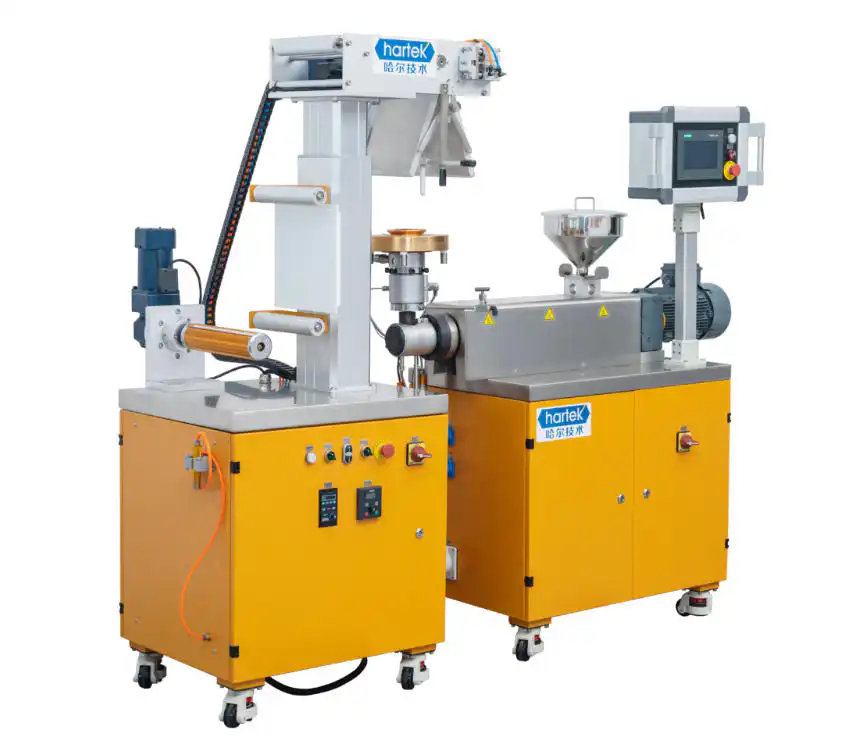
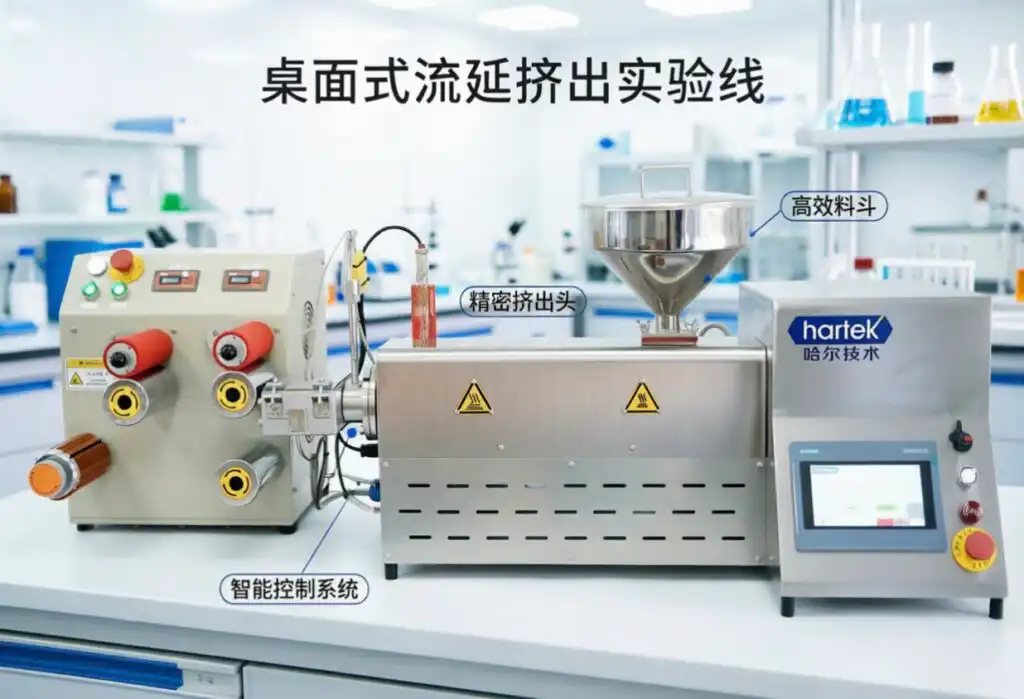
Desktop Extruder For Blown Film, Wire and Granulation

When desktop extruders are mentioned, many people immediately think of “3D printing filament machines.” However, by changing the die head and auxiliary equipment, the same desktop extruder can produce cast films, blown films, sheets, granulation, and even melt spinning. This is the concept of a “desktop polymer processing platform” advocated by Hartek. I. Universal Main

Desktop Extruder For Blown Film, Wire and Granulation Read More »

Laboratory twin-screw extruder

Recombinant Rice Formulation – Lab Twin-Screw Extruder

Amidst the wave of innovation in the food industry, reconstituted rice is gaining widespread attention as an emerging food ingredient. However, the high costs and low efficiency resulting from repeated trials in the formulation development of reconstituted rice have become a key bottleneck restricting technological breakthroughs for enterprises. To address this need, Hartek’s lab twin-screw

Recombinant Rice Formulation – Lab Twin-Screw Extruder Read More »

blown film machine

Selection Guide for Single-Layer and Multi-Layer Co-Extrusion Blown Film Machine

When developing polymer films, blown film machine lines are used. Laboratory blown film machines are divided into single-layer and multi-layer types. The R&D team needs to select the technology according to its own needs. Single-layer vs. multi-layer co-extrusion blown film experimental lines: How to choose according to R&D needs? The following content provides an objective

Selection Guide for Single-Layer and Multi-Layer Co-Extrusion Blown Film Machine Read More »

Lab Banbury Mixer

Laboratory Banbury Mixer Buying Guide

In university polymer materials laboratories and corporate R&D centers, banbury mixers (also known as closed-loop rubber mixing mills) are core equipment for research on the blending and modification of plastics, rubber, and elastomers, filler dispersion, and reactive processing. A suitable laboratory banbury mixer should not only accurately reflect the mixing behavior of materials but also

Laboratory Banbury Mixer Buying Guide Read More »

Twin-screw Granulation Line

How to Select a Laboratory Twin-screw Granulation Line

When conducting research and development on new materials, processes, or formulations in the laboratory, ensuring experimental efficiency and scalable reproducibility of data during sample preparation is crucial. As the core equipment for sample preparation, the performance adaptability of the laboratory twin-screw granulation line directly impacts the research results. When selecting a lab twin-screw granulation line,

How to Select a Laboratory Twin-screw Granulation Line Read More »

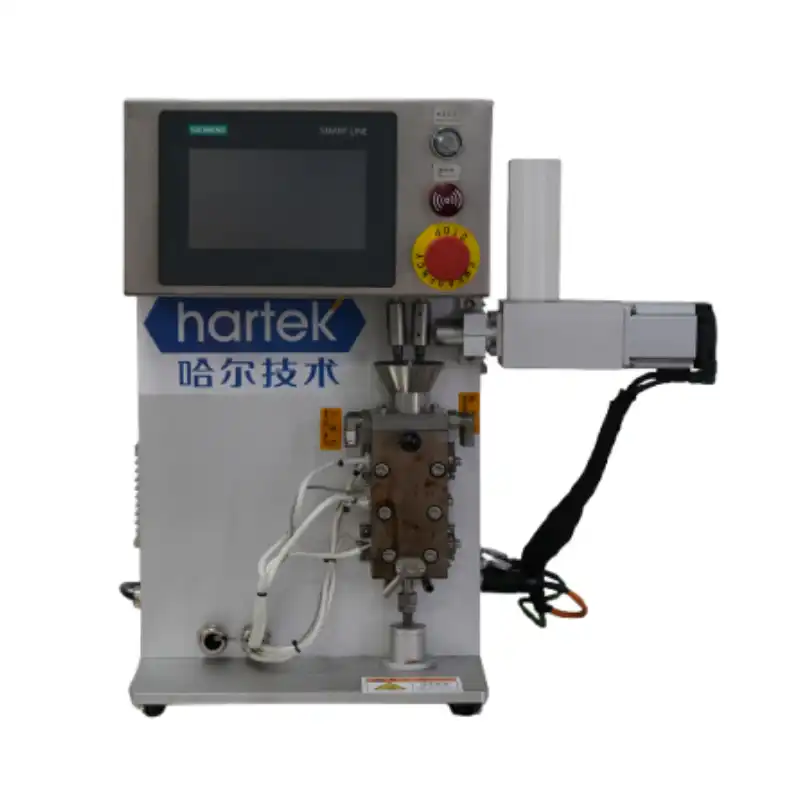
Miniature Twin-screw Extruder

Miniature Twin-screw Extruder

A micro twin-screw extruder from Hartek has been installed, commissioned, and operated by a university in Qingdao, Shandong Province, and has been officially delivered to the customer’s laboratory for use. This equipment is specifically designed for the blending and modification of trace polymer materials, formulation screening, and small-batch preparation of high-value materials. Its compact structure

Miniature Twin-screw Extruder Read More »

Co-Extrusion Blown Film Machine

Laboratory Three-Layer Co-Extrusion Blown Film Machine

Performance of the Laboratory Three-Layer Co-Extrusion Blown Film Machine: Applications of co-extrusion blown film machine: Technical Parameters: Model / 型号  HTBS-20C Screw Diameter / 螺杆直径 20mm L/D Ratio / 长径比L/D 28:1 Max. Speed / 最高转速 120rpm Heating/Cooling Method / 加热/冷却方式 Electrical heating / Air cooling Max. Temp. / 最高温度 350℃ Temp. Control Accuracy / 温控精度

Laboratory Three-Layer Co-Extrusion Blown Film Machine Read More »

Twin-Screw Extruder

Selection Guide for Conical and Parallel Twin-Screw Extruder Lab Machine

In polymer materials research laboratories, twin-screw extruders are crucial for material blending modification, reactive extrusion processes, and the preparation of functional masterbatches; their selection directly impacts experimental efficiency. Currently, mainstream mixing equipment is mainly divided into two types: conical twin-screw extruders and parallel twin-screw extruders. Although they appear similar, differences in screw structure lead to

Selection Guide for Conical and Parallel Twin-Screw Extruder Lab Machine Read More »

blown film defect detection

Blown Film Defect Detection Test Line

The blown film defect detection test line consists of a drive system, extrusion system, ring die, blow-up device, cooling air ring, traction system, winding system, film defect detection system, and electrical control system. It is widely used in food packaging, agricultural covering, and medical materials. The film gel and black spot detection system is an

Blown Film Defect Detection Test Line Read More »

3d filament extrusion pla

3D Filament Extrusion Line

The 3D filament extrusion line consists of a precision single-screw extruder, wire die, water cooling system, wire storage system, traction system, diameter measuring instrument system, winding system, and measurement and control system, which can realize functions such as wire extrusion, cooling, diameter measurement, and winding. 3D Filament Extrusion Line Working Principle A filament extruder is

3D Filament Extrusion Line Read More »

Melt Spinning Machines

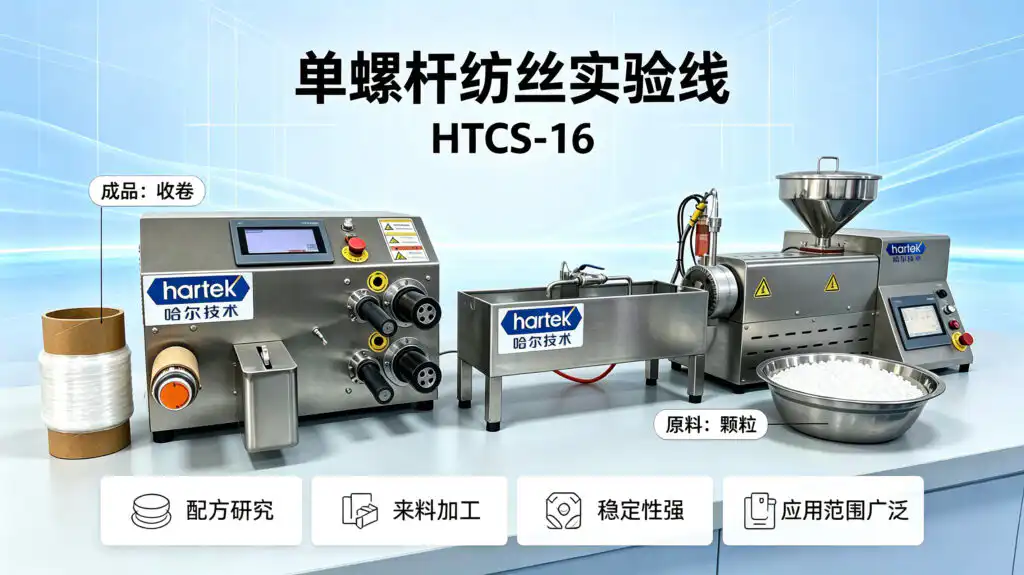
Lab Small-Scale Melt Spinning Machine

Hartek Technology Lab Single-Screw Melt Spinning Machine: Used for the preparation of PA6 nascent fibers. Features melt extrusion, spinning, and automatic winding functions; temperature and speed are adjustable. Produces uniform and stable spinning, suitable for subsequent stretching processes. Supports process development for nylon 6 industrial yarns or high-strength fibers.

Lab Small-Scale Melt Spinning Machine Read More »

Melt Spinning Machines

Benchtop Melt Spinning Machine

Benchtop melt spinning machines have emerged as indispensable tools in the realm of materials science research, offering a compact yet powerful solution for innovative material development. These machines stand out as versatile platforms for experimental research, providing researchers with precise control over the fiber formation process. Unlike industrial-scale machines designed for large-volume production, benchtop machines

Benchtop Melt Spinning Machine Read More »

Lab Multi Layer Co-extrusion Line

Selection Guide for Lab Food Packaging Cast Film Machine

In the food packaging industry, cast film is highly favored for its excellent barrier properties, transparency, and heat-sealing performance. Choosing the right laboratory casting film machine is crucial for developing innovative packaging materials and optimizing production processes. Below is a comprehensive selection guide for laboratory casting film machines, tailored to the specific needs of the

Selection Guide for Lab Food Packaging Cast Film Machine Read More »

Water Cooling System

What are the differences between water-cooled and air-cooled extruders?

Extruder Temperature Control: A Comparison of Water Cooling and Air Cooling Extruders, as crucial equipment in plastic processing, require precise temperature control during extrusion to ensure smooth extrusion and molding of plastic materials. The cooling system plays a vital role in the extruder’s heating and cooling system, and barrel cooling methods primarily include water cooling

What are the differences between water-cooled and air-cooled extruders? Read More »

extrusion machine

Desktop twin-screw sheet extrusion machine line

Performance Characteristics Application of twin screw extrusion machine Feasibility verification of sheet forming for biodegradable materials such as PLA, PBAT, and PHA; Small-scale extrusion of natural polymer composite systems such as starch-based and cellulose-based materials; Experimental production of modified sheets using highly filled inorganic fillers (such as calcium carbonate and talc) or recycled plastics; Research

Desktop twin-screw sheet extrusion machine line Read More »

desktop twin-screw extruders

The role of desktop twin-screw extruders in ultrafiltration membranes

Seamless transition from pilot-scale testing to mass production of ultrafiltration membranes Desktop twin-screw extruders provide efficient, economical, and reliable technical solutions for ultrafiltration membrane research and development. They not only accelerate the development of innovative materials and processes but also save companies R&D costs, reduce technical risks, and effectively promote the transformation of R&D results

The role of desktop twin-screw extruders in ultrafiltration membranes Read More »

Lab Blown Film Machine

Applications of Lab Blown Film Machine

Lab Blown Film Machine I. Technical Requirements and Equipment Characteristics for Composite Film R&D With the continuous improvement of packaging material performance requirements, traditional single-layer films are increasingly unable to meet the increasingly complex application needs. In contrast, multilayer composite films, by combining the advantages of different materials, can significantly improve the barrier properties, mechanical

Applications of Lab Blown Film Machine Read More »

en_USEnglish
Scroll to Top