
When desktop extruders are mentioned, many people immediately think of “3D printing filament machines.” However, by changing the die head and auxiliary equipment, the same desktop extruder can produce cast films, blown films, sheets, granulation, and even melt spinning. This is the concept of a “desktop polymer processing platform” advocated by Hartek.
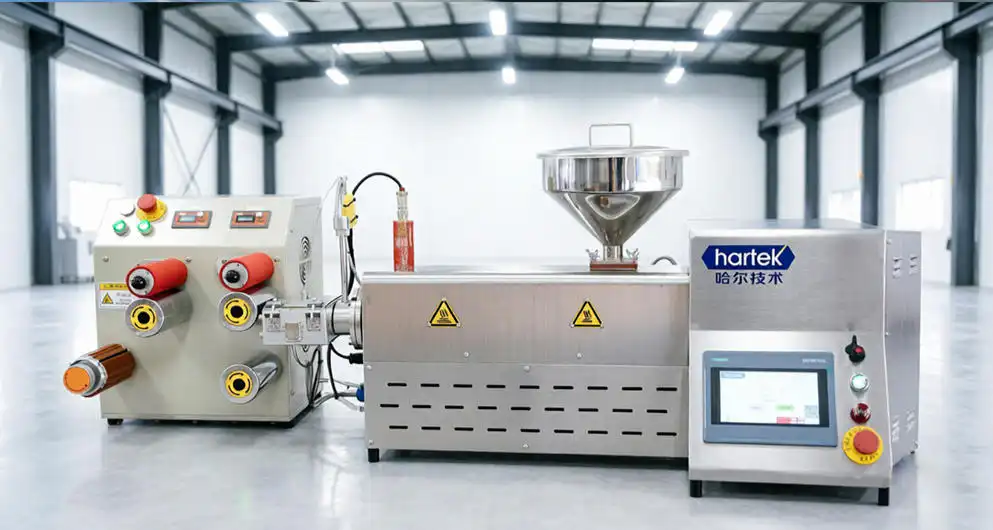
I. Universal Main Unit, Modular Switching
The Hartek desktop extrusion main unit (16mm single screw) adopts a modular design: quick-change connectors support different dies and downstream equipment.
- +Hanger Die + Casting Unit + Rewinding → Cast Film Experimental Line
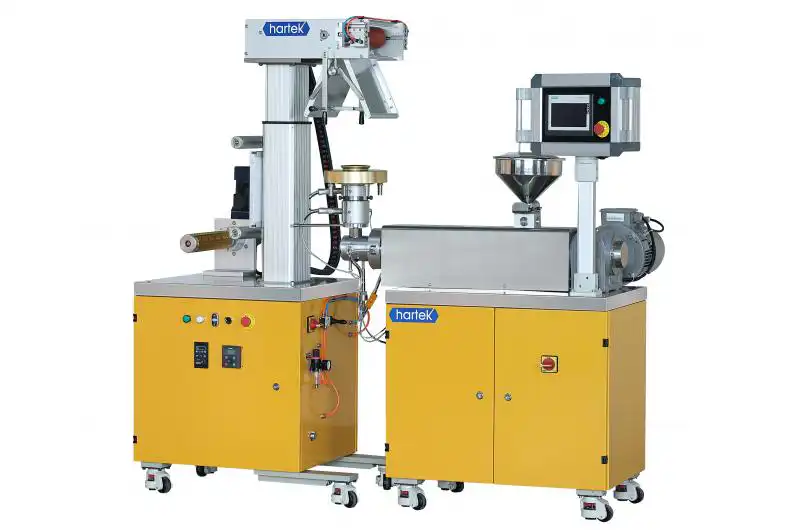
- +Blown Film Die + Traction + Rewinding → Laboratory Blown Film Machine
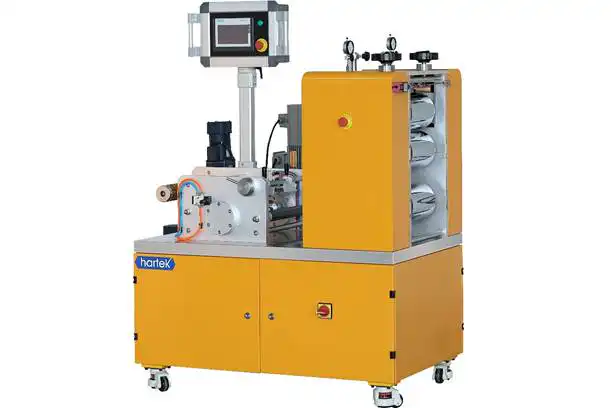
- +Sheet Die + Three-Roll Calender → Three-Roll Calender Sheet Experimental Line
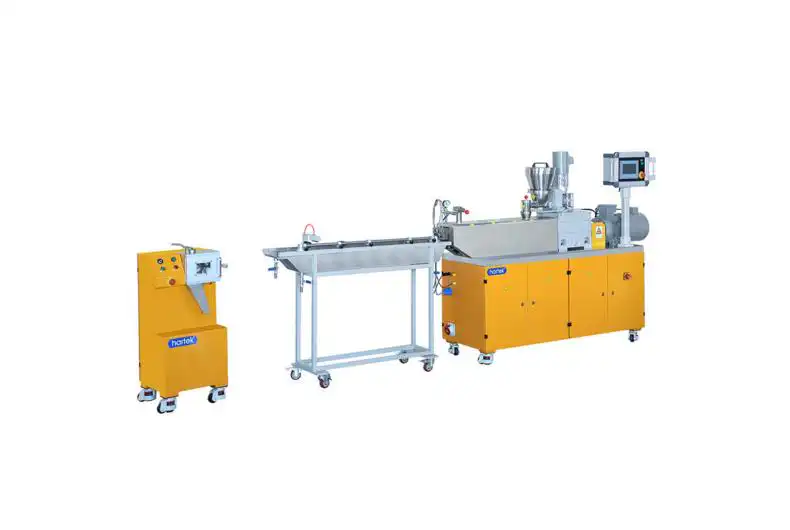
- +Granulation Die + Pelletizer → Twin-Screw Extrusion Granulation Experimental Line
- +Wire Die + Cooling Water Tank + Traction + Winding → 3D Printing Consumables Experimental Line
II. Real-World Case Studies from R&D Users
A modification company: Using the same main unit, casting film formulation screening is done on Mondays, blown film comparison is done on Wednesdays with a different die, and wire verification is done on Fridays. One machine completes small-scale trials of three products.
A university research group: Equipped with one HAER main unit + multiple functional modules, it supports three graduate students with different research directions (biodegradable films, conductive sheets, and medical consumable filaments, respectively).
III. Advantages of Desktop Extruder
Small footprint: A modular main unit + functional units occupy less than 2 square meters.
Controllable cost: Only the main unit and basic modules need to be purchased; additional units can be purchased as needed.
Unified operation: A consistent control system interface reduces learning costs.
Consistent data: Experimental data from different processes are recorded on the same platform, facilitating horizontal comparison.
IV. Applicable Scenarios
University materials laboratories: One device supports multiple experimental courses.
Enterprise R&D centers: Quickly switch between small-scale testing needs of different product lines.
Public testing platforms/pilot plant bases: Provide customers with various process processing services.
V. What should users pay attention to?
While the modular design is flexible, switching between the mold head and downstream units requires some hands-on ability. Hartek provides video tutorials and on-site training.
 English
  Arabic
  German
  Spanish
  French
  Russian