
In polymer materials research laboratories, twin-screw extruders are crucial for material blending modification, reactive extrusion processes, and the preparation of functional masterbatches; their selection directly impacts experimental efficiency. Currently, mainstream mixing equipment is mainly divided into two types: conical twin-screw extruders and parallel twin-screw extruders. Although they appear similar, differences in screw structure lead to different applicable scenarios. This article provides a systematic guidance for laboratory equipment selection from three aspects: working principle, material compatibility, and experimental objectives.
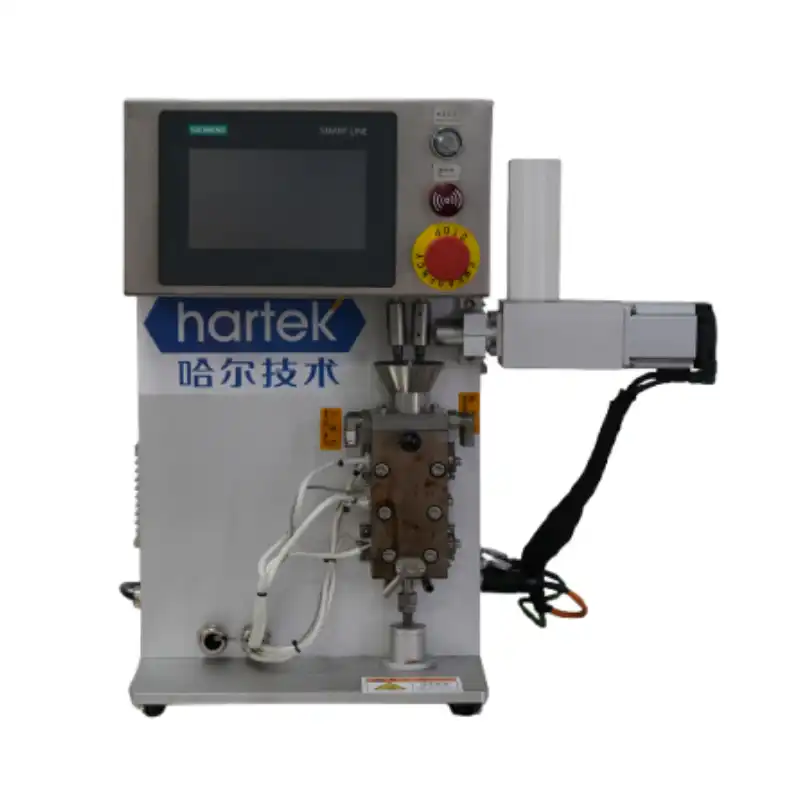
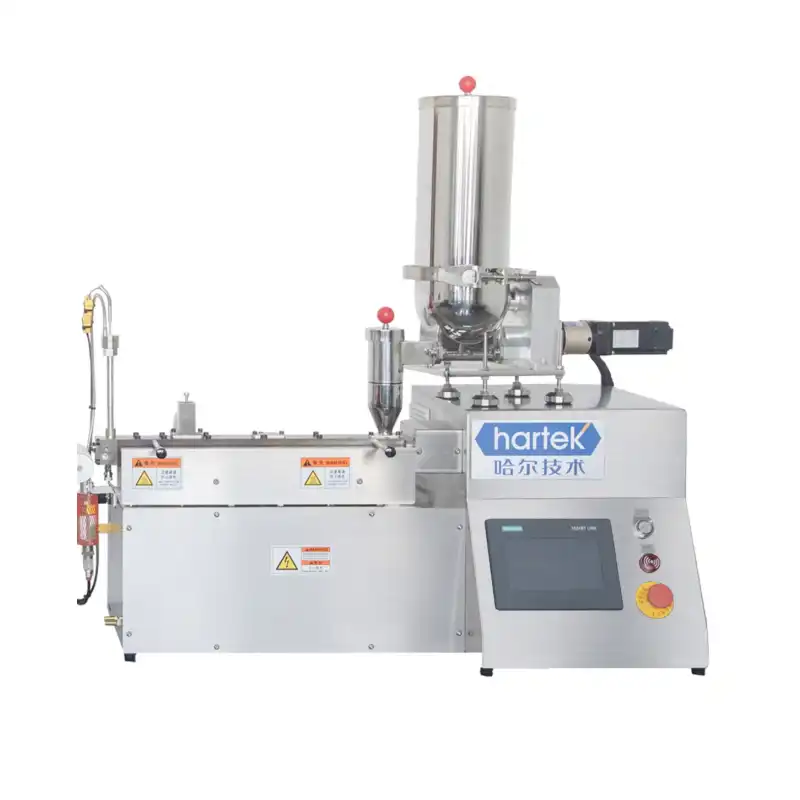
Comparison of core structure and working principle:
| Characteristics | Conical twin-screw extruder | Parallel twin-screw extruder |
| Screw Shape | Screw diameter gradually increases (conical) | Screw diameter remains constant (cylindrical) |
| Rotation Direction | Mostly counter-rotating | mostly co-rotating |
| Compression Method | Geometric compression | functional compression |
| Shear Strength | Low to medium, mild mixing | medium to high, strong dispersing ability |
| Typical Length-to-Diameter Ratio (L/D) | 10:1–15:1 | 20:1–40:1 |
Material Compatibility Analysis
- Recommended Scenarios for Conical Twin-Screw Extruders
- Rigid PVC Products (Pipes, Profiles): Counter-rotating rotation and low shear prevent PVC dehydrochlorination degradation; processing temperature is typically controlled at 160–180℃.
- High-Filling Wood-Plastic Composites (WPC): When wood flour/calcium carbonate filler content >50 phr, the progressive compression of the conical extruder reduces filler breakage and improves surface quality.
- Recycled Plastics (Containing Impurities): Short residence time and gentle shear reduce the risk of secondary thermal degradation.
- Recommended Scenarios for Parallel Twin-Screw Extruders
- Biodegradable Blends (PLA/PBAT): Precise control of dispersion and compatibility is required; modular screws can optimize the mixing section.
- Functional Masterbatch Development (Flame Retardant, Conductive, Antibacterial): High-shear kneading blocks ensure uniform dispersion of nanofillers (such as carbon nanotubes).
- Reactive Extrusion or Deviation Processes: Multi-temperature zones + vacuum degassing + long residence time support chemical grafting or solvent removal.
Selection Decision Recommendations
| Experimental Objectives | Recommended Equipment Type | Reasons |
| Verifying the thermal stability of PVC formulations | Conical twin-screw extruder | Low shear, short residence time, preventing yellowing/black spots |
| Developing highly dispersed carbon fiber masterbatch | Parallel | Requires high shear and multi-stage mixing |
| Small-scale testing of wood-plastic composites | Conical | Protects wood fibers and avoids over-grinding |
| PLA/PHA blend compatibility study | Parallel | Flexible screw combination adjustment optimizes interface bonding |
| Basic university teaching (demonstrating extrusion principles) | Parallel | Modular design provides a more intuitive demonstration of the mixing process |
Current laboratory equipment is trending towards miniaturization:
Miniature conical extruders (screw small end diameter ≤20 mm): suitable for PVC or WPC validation with batches <100 g/batch; Desktop parallel extruders (screw diameter 12–25 mm): suitable for high-throughput formulation screening.
In selecting laboratory extrusion equipment, different material systems and R&D goals should be considered. For heat-sensitive and high-filling materials, conical extruders with natural compression, strong powder conveying capacity, and good adaptability to heat-sensitive materials are preferred; if dispersion and process flexibility are sought, parallel extruders with modular design, precise and controllable shearing, and high process flexibility are selected. For comprehensive R&D institutions, equipping both types of equipment to cover different R&D needs is also a resource allocation solution.
 English
  Arabic
  German
  Spanish
  French
  Russian