
تحليل شامل للآلات البثق: مبدأ العمل، والتصنيف، والهيكل، والصناعات التي تستخدمها، وإرشادات الاختيار
تُعد آلة البثق، المعروفة بالكامل باسم “آلة البثق اللولبية للبلاستيك”، المعدات الأساسية في مجال معالجة المواد البوليمرية. وغالبًا ما يُشار إليها باعتبارها «الآلة المكنية لصناعة معالجة البلاستيك». ويتمثل مبدأ عملها الأساسي في استخدام الحركة الدورانية للبرغي، مقترنة بالتسخين الخارجي من الأسطوانة، لإتمام عمليات النقل والضغط والصهر والتليين والخلط وإزالة الغازات من المواد البوليمرية الصلبة. وفي النهاية، تقوم الآلة بشكل مستمر ببثق مادة منصهرة متجانسة ومستقرة بضغط ومعدل تدفق ودرجة حرارة ثابتة، والتي يتم تشكيلها بعد ذلك بواسطة القوالب والمعدات المساعدة في المراحل اللاحقة لتشكيل المنتجات النهائية.
تُعد آلة البثق وحدة الطاقة والتليين الأساسية في خط إنتاج البثق البلاستيكي. وهي متوافقة على نطاق واسع مع مواد مثل البلاستيك الاستهلاكي، والبلاستيك الهندسي، واللدائن الحرارية المرنة، والبلاستيك القابل للتحلل الحيوي. ويغطي هذا الجهاز تقريبًا جميع سيناريوهات معالجة اللدائن الحرارية، بما في ذلك الأنابيب، والمقاطع المقطعية، والأغشية، والألواح، وطلاء الأسلاك والكابلات، وتصنيع الحبيبات، والمنتجات الطبية. ويتم تصنيع أكثر من 80% من منتجات اللدائن الحرارية في جميع أنحاء العالم من خلال عمليات البثق.
أولاً: الوظائف الأساسية والقيمة الصناعية
تمتد القيمة الأساسية للآلة البثق لتشمل العملية بأكملها، بدءًا من مادة البوليمر الصلبة وصولاً إلى المنتج النهائي. وهي المعدات الرئيسية التي تحدد سعة خط الإنتاج وجودة المنتج واستقرار الإنتاج. وتتمثل وظائفها الأساسية فيما يلي:
- النقل المستمر للمواد الصلبة وضغطها
اعتمادًا على التفاعل الهيكلي بين اللولب والأسطوانة، يحقق جهاز البثق عملية نقل المواد الصلبة بالإزاحة الإيجابية. وفي الوقت نفسه، يعمل على زيادة ضغط الذوبان تدريجيًا، مما يحول المواد الصلبة ذات الضغط المنخفض إلى مادة منصهرة مستقرة ذات ضغط عالٍ. ويوفر ذلك ضغط تشكيل كافٍ وتدفقًا مستقرًا للقوالب في المراحل اللاحقة، مما يشكل الأساس للإنتاج المستمر. - الذوبان والتليين المتساويان للمواد
من خلال القصاص والضغط والاحتكاك الناتجة عن المسمار الدوار، إلى جانب التسخين الخارجي من الأسطوانة، يتم صهر حبيبات البلاستيك الصلبة أو مساحيقه بالكامل. ويؤدي ذلك إلى انتقال متجانس من الحالة عالية المرونة إلى حالة التدفق اللزج، مما يزيل البقع البلورية غير المذابة والتليين غير المتساوي. وتعد هذه الخطوة أساسية لضمان جودة المنتج. - الخلط والتجانس الفعال للمواد متعددة المكونات
من خلال تحسين تصميم اللولب، يحقق جهاز البثق تشتتًا فعالاً وخلطًا توزيعيًا لمكونات متعددة، مثل مصفوفة الراتينج مع الحشوات، وعوامل التقوية، والمسترباتشات، والمواد المضافة، والألياف الزجاجية. ويضمن ذلك التوزيع المتجانس للتركيبة واللون والأداء في جميع أنحاء المادة، مما يجعله الجهاز الأساسي لتعديل البلاستيك وتركيبه. - إزالة الغازات والتهوية
تستطيع آلات البثق المزودة بفتحات تهوية إزالة الرطوبة، والمونومرات المتبقية، والمواد المتطايرة منخفضة الوزن الجزيئي، والهواء، والشوائب الأخرى من المادة من خلال نظام تهوية بالفراغ. وهذا يمنع ظهور عيوب مثل الفقاعات، وتجاويف الانكماش، والخطوط الفضية في المنتج النهائي، مع تحسين الخصائص الميكانيكية ومراعاة البيئة في الوقت نفسه. وهي مناسبة لمعالجة المواد المعاد تدويرها والمواد عالية الرطوبة. - التحكم الدقيق في معلمات العملية بنظام الحلقة المغلقة
بفضل استخدام مستشعرات وأنظمة تحكم عالية الدقة، يحقق جهاز البثق تحكمًا في حلقة مغلقة لدرجة حرارة المادة المنصهرة، والضغط، ومعدل التدفق، وسرعة اللولب، وعزم الدوران. ويضمن ذلك استقرار العملية أثناء البثق، مما ينتج عنه أبعاد وخصائص متسقة للغاية في المنتجات المصنعة بكميات كبيرة، وهي مناسبة للتصنيع الدقيق المتطور. - توسيع حدود معالجة المواد
من خلال التصاميم الهيكلية وتصاميم العمليات المخصصة، يمكن لآلات البثق التكيف مع المواد التي يصعب معالجتها، مثل المواد البلاستيكية الهندسية المتخصصة الحساسة للحرارة، وذات اللزوجة العالية، والغنية بالملء، والتي تتحمل درجات حرارة فائقة، بالإضافة إلى المواد البلاستيكية القابلة للتحلل البيولوجي. وهي تتيح إجراء عمليات خاصة مثل البثق التفاعلي، وبثق الرغوة، والبثق المشترك، مما يوسع نطاق تطبيقات المواد البوليمرية.
ثانياً: مبدأ العمل الأساسي
تتمحور عملية العمل الأساسية للآلة البثق حول الحركة الدورانية للبرغي، مقترنةً بنظام التحكم في درجة حرارة الأسطوانة، من أجل إتمام التحويل الكامل للمادة من الحالة الصلبة إلى حالة ذوبان متجانسة. وتنقسم العملية بشكل عام إلى ثلاث مراحل عمل، مصحوبةً بالتأثيرات التآزرية للحرارة الناتجة عن القص والتسخين الخارجي. وفيما يلي المبادئ المحددة:
المراحل العملية الثلاث الأساسية (لآلات البثق التقليدية أحادية اللولب)
بعد دخول المادة البلاستيكية إلى الأسطوانة من قادوس التغذية، يتم نقلها محوريًّا على طول قناة اللولب مع دوران اللولب. وتمر المادة بالتتابع عبر ثلاثة أقسام وظيفية لإتمام عملية البلاستيسة والبثق بالكامل:
- قسم التغذية (قسم نقل المواد الصلبة): الجزء الأولي من اللولب، الذي يتميز بأعمق عمق للقناة. وتتمثل وظيفته الأساسية في استقبال المواد الصلبة ونقلها مع تسخينها مسبقًا وضغطها. تظل المادة صلبة في هذا الجزء، ويتم دفعها إلى الأمام بفعل الاحتكاك بين اللولب والأسطوانة، حيث يتم ضغطها تدريجيًا لتشكل سدادة صلبة، وفي الوقت نفسه تمتص الحرارة الخارجية من الأسطوانة وكمية صغيرة من حرارة الاحتكاك، فتبدأ في التليين.
- قسم الضغط (قسم الصهر): الجزء الأوسط من اللولب، حيث يتناقص عمق القناة تدريجيًّا. وتتمثل وظيفته الأساسية في ضغط المادة المضغوطة وقصها وصهرها. ومع تناقص حجم القناة تدريجيًّا، تتعرض المادة لضغط مستمر. يولد القص القوي بين المسمار والأسطوانة والمادة كمية كبيرة من حرارة التبديد اللزج، والتي، بالاقتران مع التسخين الخارجي، تعمل على صهر المادة الصلبة تدريجيًا. ويتحقق الصهر الكامل في نهاية قسم الضغط، مما يؤدي إلى الانتقال من الحالة الصلبة إلى حالة التدفق اللزج.
- قسم القياس (قسم التجانس): الجزء النهائي من اللولب، الذي يتميز بأعمق قناة ثابتة. وتتمثل وظيفته الأساسية في تجانس المادة المنصهرة، وتثبيت الضغط، ونقلها كمياً. في هذا الجزء، تخضع المادة المنصهرة بالكامل لمزيد من القص والخلط لإزالة التباينات في درجة الحرارة والتركيب واللزوجة. وفي الوقت نفسه، يتم تأسيس ضغط ثابت للمادة المنصهرة، ويتم في النهاية توصيل المادة بمعدل تدفق وضغط ودرجة حرارة ثابتة عبر المهايئ إلى مبدلات الشاشات والقوالب الواقعة في المرحلة التالية لإكمال عملية البثق.
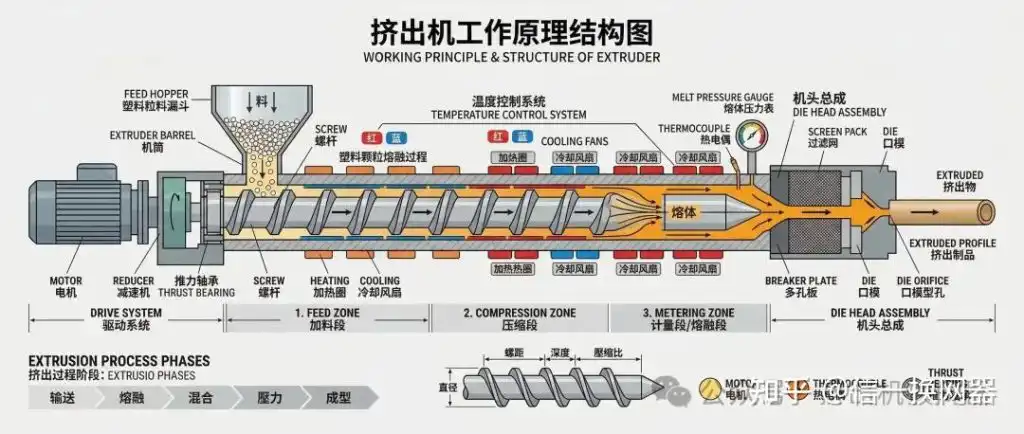
مبدأ انصهار اللب
لا يعتمد ذوبان البلاستيك وتليينه على التسخين الخارجي للأسطوانة وحده. وتنقسم مصادر الحرارة الأساسية إلى قسمين:
- الحرارة الناتجة عن القص (مصدر الحرارة الأساسي): أثناء دوران اللولب، تؤدي الحركة النسبية بين اللولب والأسطوانة إلى إحداث قص واحتكاك قويين على المادة، مما يحول الطاقة الميكانيكية إلى طاقة حرارية. ويُعد هذا المصدر الرئيسي للحرارة اللازمة للصهر. وفي ظل ظروف البثق عالية السرعة، يمكن أن تشكل حرارة القص أكثر من 70% من إجمالي الحرارة، مما يستلزم أحيانًا استخدام أنظمة تبريد لإزالة الحرارة الزائدة.
- التدفئة الخارجية (مصدر التدفئة الإضافي): يتم توفيرها بواسطة سخانات مثبتة على الجدار الخارجي للبرميل، وتُستخدم بشكل أساسي للتسخين المسبق أثناء بدء التشغيل ولتوفير الحرارة الإضافية في ظروف البثق ذات درجات الحرارة المنخفضة، وذلك لضمان بلوغ درجة حرارة الانصهار الأولية والحفاظ على استقرار درجة حرارة المادة المنصهرة.
مبدأ تراكم الضغط
ينشأ ضغط الذوبان أثناء عملية البثق عن الانخفاض التدريجي في حجم قناة اللولب، ومقاومة الخانق في القالب، والتحكم في التدفق العكسي عبر الفراغ بين اللولب والأسطوانة. ومع دوران اللولب، تواجه المادة المنقولة إلى الأمام مقاومة من القالب الموجود في اتجاه مجرى التدفق، مما يؤدي إلى تراكم الضغط تدريجيًّا. وتعمل القناة الضحلة في قسم القياس على تقييد التدفق العكسي للضغط، مما يؤدي في النهاية إلى تحقيق إخراج ذوبان عالي الضغط ومستقر، ويوفر القوة الأساسية لتشكيل القالب.
ثالثًا: التصنيف الأساسي والخصائص الهيكلية
يعتمد التصنيف الأكثر شيوعًا في هذا المجال على عدد البراغي والتكوين الهيكلي. وتختلف أنواع آلات البثق اختلافًا كبيرًا من حيث التوافق مع المواد، والقدرة على التكيف مع العمليات، وسيناريوهات الاستخدام. وفيما يلي التصنيفات الأساسية والخصائص التقنية:
(I) آلات البثق أحادية اللولب
تُعد آلات البثق أحادية اللولب أكثر الآلات أساسيةً وأكثرها استخدامًا في الصناعة. وهي تتألف من لولب واحد وأسطوانة واحدة، وتتميز ببساطة هيكلها وتكلفتها المنخفضة وسهولة صيانتها. وتُعد هذه الآلات العمود الفقري لعمليات القولبة بالبثق العامة. وبناءً على هيكل اللولب ووظيفته، يمكن تقسيمها إلى ستة أنواع:
| النوع الفرعي | السمات الهيكلية الأساسية | المزايا والعيوب الأساسية | السيناريوهات الأساسية القابلة للتطبيق |
|---|---|---|---|
| نوع تقليدي تدريجي أحادي اللولب | برغي تدريجي مكون من ثلاثة أقسام متساوية المسافات؛ يتناقص عمق القناة تدريجيًا من قسم التغذية إلى قسم القياس؛ وهيكل بسيط للغاية. | المزايا: هيكل بسيط، وتكلفة شراء وصيانة منخفضة، وسهولة في التشغيل، وأداء مستقر. العيوب: قدرة خلط ضعيفة، وكفاءة تليين محدودة، وقدرة ضعيفة على التكيف مع المواد المختلفة؛ غير مناسبة للمواد عالية المحتوى من الحشو أو الحساسة للحرارة. | البثق العام لأنابيب البولي إيثيلين (PE) والبولي بروبيلين (PP)، والأغشية، والألواح، وأغلفة الكابلات؛ البثق ذو المتطلبات المنخفضة للمواد البكر؛ خطوط الإنتاج ذات السعة الصغيرة إلى المتوسطة. |
| من النوع الحاجزي أحادي اللولب | تُركَّب مجموعة فتحات الحاجز في قسم الصهر، حيث تفصل المواد الصلبة غير المذابة عن المادة المنصهرة، وتدفع المواد الصلبة عبر فجوات الحاجز من أجل الصهر بالقص. | المزايا: كفاءة عالية في التليين، وتجانس جيد للذوبان، وتقلبات منخفضة في الضغط، وإنتاجية عالية. العيوب: تصنيع البراغي صعب، وقوة القص عالية، ولا يناسب المواد شديدة الحساسية للحرارة. | خطوط البثق عالية السرعة، والأغشية، والألواح، وعمليات البثق العامة ذات السعة الكبيرة؛ والتطبيقات التي تتطلب درجة عالية من التوحيد في عملية التليين. |
| من النوع المنفصل (BM) أحادي اللولب | رحلة ثانوية إضافية في قسم الصهر، تفصل تمامًا بين الطبقة الصلبة وبركة الصهر من أجل النقل المنفصل. | المزايا: كفاءة تليين عالية للغاية، ذوبان سريع، تحكم دقيق في درجة الحرارة، تقلبات ضغط ضئيلة، وعدم وجود جزيئات غير مذابة. العيوب: هيكل معقد، وتكلفة معالجة مرتفعة، وقدرة محدودة على التكيف مع نطاقات اللزوجة. | بثق الأغشية عالية الجودة، والألواح البصرية، والأنابيب الدقيقة؛ خطوط إنتاج عالية السرعة وذات سعة إنتاجية كبيرة؛ تطبيقات تتطلب معايير صارمة فيما يتعلق بالهلام والبقع السوداء. |
| ذو لولب واحد ومزود بفتحات تهوية | يحتوي المسمار على قسم لتخفيف الضغط؛ ويحتوي الأسطوانة على فتحة تنفيس فراغ متصلة بمضخة فراغ؛ مع مرحلة تنفيس واحدة أو عدة مراحل. | المزايا: إزالة الرطوبة والمواد المتطايرة أثناء العملية دون الحاجة إلى تجفيف مسبق؛ جودة تليين جيدة؛ مناسب للمواد عالية الرطوبة والمواد المعاد تدويرها. العيوب: هيكل معقد، وصعوبة كبيرة في تصميم المسمار، وتكلفة أعلى مقارنة بالطرازات القياسية. | بثق البلاستيك المعاد تدويره؛ معالجة المواد ذات المحتوى الرطوبي العالي؛ البولي إيثيلين تيريفثالات (PET) والبولي أميد (PA) والمواد المسترطبة الأخرى؛ يمنع ظهور الفقاعات والخطوط الفضية. |
| من النوع الدبوس ذو اللولب الواحد | دبابيس مثبتة على الجدار الداخلي للأسطوانة أو في قناة اللولب لتقسيم تدفق المادة المنصهرة، مما يعزز عملية القص والخلط. | المزايا: تتميز بقدرة خلط أفضل بكثير مقارنةً بالآلات التقليدية ذات اللولب الواحد؛ وتتميز بتجانس جيد للمادة المنصهرة، وتحكم دقيق في درجة الحرارة، وتكلفة أقل مقارنةً بالآلات ذات اللولبين. العيوب: قوة قص عالية، غير مناسب للمواد شديدة الحساسية للحرارة. | مركبات الكابلات، والمواد المعدلة ذات نسبة الحشو المنخفضة، وبثق المطاط، وإنتاج الألواح والصفائح؛ والتطبيقات العامة التي تتطلب بعض عمليات الخلط. |
| آلة البثق اللولبية الكوكبية | يتألف من برغي رئيسي مركزي وعدة براغي كوكبية تدور حول البرغي الرئيسي، كما تدور حول محاورها الخاصة داخل الحلقة التروسية الداخلية للبرميل. | المزايا: كفاءة تليين عالية للغاية، قص متجانس، وقت بقاء قصير للمواد، عدم وجود مناطق ميتة، قدرة جيدة على التنظيف الذاتي. العيوب: هيكل معقد، يتطلب دقة تصنيع عالية، وتكلفة مرتفعة؛ غير مناسب للمواد الصلبة عالية المحتوى من الحشو. | معالجة المواد الحساسة للحرارة (PVC، PMMA)؛ تغذية خطوط إنتاج الألواح والصفائح وخطوط الكالندرة؛ بثق المواد المخصصة للاستخدام الغذائي. |
(II) آلات البثق ثنائية اللولب
تتألف آلات البثق ثنائية اللولب من لولبين متوازيين أو مخروطيين متشابكين وأسطوانة. وتعتمد هذه الآلات على الحركة المتشابكة للولبين لتحقيق النقل بالإزاحة الإيجابية. وتتفوق قدرتها على الخلط، وقدرتها على التنظيف الذاتي، وقابليتها للتكيف مع المواد بشكل كبير على آلات البثق أحادية اللولب، مما يجعلها الآلات الأساسية لتعديل البلاستيك، والمواد الصعبة المعالجة، والقولبة عالية الجودة.
بناءً على طريقة تشابك اللولب، واتجاه الدوران، والشكل الهيكلي، تنقسم هذه المكونات إلى أربع فئات رئيسية:
- آلة البثق ذات اللولبين المتوازيين المتناوبين
- الهيكل الأساسي: برغيان متوازيان من نفس القطر يدوران في نفس الاتجاه. ويمكن أن يكونا متشابكين بشكل وثيق أو غير متشابكين؛ والمعيار الصناعي هو النوع المتشابك بشكل وثيق ذو التنظيف الذاتي. تتميز اللولبين بتصميم معياري (مكون من وحدات)، مما يتيح تعديل قدرات النقل والخلط والقص عن طريق تغيير عناصر اللولب وكتل العجن.
- المزايا الأساسية:
- قدرة ممتازة على التنظيف الذاتي؛ حيث تعمل الأجنحة المتشابكة على مسح بعضها البعض لمنع تراكم المواد وتفحّمها، مما يجعلها مناسبة للإنتاج المستمر.
- قدرة خلط عالية جدًّا؛ تتيح العناصر المعيارية ضبط شدة القص بمرونة من أجل خلط وتشتيت فعال للمواد متعددة المكونات.
- خصائص نقل جيدة؛ يتميز نظام النقل بالإزاحة الإيجابية بقوته، مع قدرة واسعة على التكيف مع المواد المختلفة، بما في ذلك المساحيق، والمواد عالية المحتوى من الحشو، والمواد المقواة بالألياف الزجاجية، والمواد الحساسة للحرارة.
- يمكنه استيعاب عملية تفريغ الفراغ متعدد المراحل لتحقيق إزالة جيدة للمواد المتطايرة، وهو مناسب للبثق التفاعلي وتعديل إزالة المواد المتطايرة.
- سرعة عالية، وإنتاجية عالية، وعزم دوران نوعي مرتفع، وكفاءة إنتاج أعلى بكثير مقارنةً بالآلات أحادية اللولب.
- العيوب: هيكل معقد، وتكاليف شراء وصيانة مرتفعة، وتشغيل أكثر صعوبة؛ كما أن استقرار الضغط أثناء التشكيل أقل مقارنةً بالآلات ذات اللولبين المتعاكسين والآلات ذات اللولب الواحد.
- السيناريوهات القابلة للتطبيق: تعديل البلاستيك، وتكوين الحبيبات، وتعزيز الألياف الزجاجية، والتعبئة والمزج، وإنتاج الخلطات الأساسية، والبثق التفاعلي، وإعادة التدوير عن طريق إزالة المركبات المتطايرة، ومعالجة المواد عالية المحتوى من الحشو – وهي الركيزة الأساسية لصناعة تعديل البلاستيك.
- آلة البثق ذات اللولبين المتوازيين المتعاكسين
- الهيكل الأساسي: برغيان متوازيان يدوران في اتجاهين متعاكسين، إما متشابكان نحو الداخل أو نحو الخارج؛ والنوع السائد هو التشابك نحو الداخل. وعادةً ما تكون البراغي متكاملة، مع فراغ تشابك صغير وقدرة قوية على توليد الضغط.
- المزايا الأساسية: نظام نقل قوي جدًّا يعتمد على الإزاحة الإيجابية، ووقت بقاء موحد، وقوة قص معتدلة، وقدرة على توليد الضغط تفوق بكثير تلك الموجودة في المسمار المزدوج المتناوب الدوران، وضغط بثق مستقر دون نبضات.
- العيوب: قدرة التنظيف الذاتي أقل مقارنةً بالنظام المتناوب، وسرعة قصوى أقل، وقدرة خلط محدودة، وغير مناسب لعمليات التعديل التي تتطلب قصًا عاليًا.
- السيناريوهات القابلة للتطبيق: البثق المباشر لمسحوق البولي فينيل كلوريد (PVC)؛ إنتاج الأنابيب والمقاطع والألواح؛ البثق بالتشكيل المستمر للمواد الحساسة للحرارة ذات القص المنخفض.
- آلة البثق المخروطية ثنائية اللولب
- الهيكل الأساسي: برغيان مخرويان متشابكان يدوران في اتجاهين متعاكسين؛ ويتناقص قطر البرغي تدريجيًا من قسم التغذية إلى قسم القياس. هيكل متكامل، حيث تم تصميم الأسطوانة والبرغي بحيث يتناسبان بشكل مخروي.
- المزايا الأساسية: قطر كبير في قسم التغذية، ومساحة كبيرة لتبديد الحرارة، وقدرة على استيعاب كمية أكبر من المسحوق، وقدرة نقل قوية؛ ويتم تحقيق نسبة الضغط من خلال التصميم المخروطي دون تغيير عمق القناة، مما يوفر قوة عالية للبرغي؛ وقطر صغير في الطرف، وقوة قص معتدلة، وقدرة قوية على توليد الضغط، مما يجعله مناسبًا لمعالجة مسحوق البولي فينيل كلوريد (PVC) الحساس للحرارة؛ وعزم دوران عالٍ مع خصائص ممتازة في العزم العالي عند السرعات المنخفضة.
- العيوب: سرعة قصوى منخفضة، وقدرة خلط محدودة، وصعوبة في تصنيع اللولب، وتعدد استخدامات أقل.
- السيناريوهات القابلة للتطبيق: المقاطع البلاستيكية-الفولاذية المصنوعة من مادة PVC، وأنابيب PVC، وألواح PVC، والبثق المركب من الخشب والبلاستيك – الآلة المتخصصة والموثوقة لمعالجة مسحوق PVC.
- آلة بثق ثنائية اللولب غير متشابكة
- الهيكل الأساسي: برغيان غير متشابكان، يبلغ البعد بين مركزيهما أكثر من مجموع قطريهما؛ ويمكن أن يدورا في نفس الاتجاه أو في اتجاهين متعاكسين، على غرار برغيين أحاديين متوازيين.
- المزايا الأساسية: وقت بقاء طويل للمواد، وسعة كبيرة لاستيعاب المواد، وإمكانية توفير تهوية متعددة المراحل لضمان إزالة المتطايرة بشكل جيد، ومناسبة للمواد عالية التطاير.
- العيوب: كفاءة منخفضة في التنظيف الذاتي، وخلط ضعيف، ونقل بالإزاحة الإيجابية ضعيف، ونادرًا ما تُستخدم في الصناعة.
- السيناريوهات القابلة للتطبيق: البثق التفاعلي الخاص، وإزالة المركبات المتطايرة من المواد عالية التطاير، والمعالجة المسبقة لإعادة التدوير الكيميائي للنفايات البلاستيكية، وغيرها من التطبيقات المتخصصة.
(III) آلات البثق متعددة اللولب
تشير مصطلح «آلات البثق متعددة اللولب» إلى تلك التي تحتوي على ثلاثة لولب أو أكثر. والأنواع السائدة هي آلات البثق ثلاثية اللولب وآلات البثق ذات اللولب الكوكبي، والتي تُستخدم بشكل أساسي في التطبيقات الخاصة التي تتطلب قدرات عالية:
- آلة البثق ذات الثلاثة براغي: ثلاثة براغي متشابكة تدور في نفس الاتجاه، مرتبة في تشكيلة مثلثية، بتصميم معياري. وبالمقارنة مع البراغي المزدوجة، فإنها تتميز بمناطق تشابك أكثر، وقص أكثر اتساقًا، وخلط وتشتت أفضل، وقدرة قوية على التنظيف الذاتي، ووقت مكوث أقصر، وعزم دوران نوعي أعلى، وإنتاجية أعلى. مناسبة للخلائط الرئيسية عالية الجودة، والتعديلات عالية الحشو، وتشتت المواد النانوية، ومعالجة المواد الحساسة للحرارة – خيار مطور في صناعة التعديل.
- آلات البثق ذات الأربعة براغي / متعددة البراغي: مسامير متعددة مرتبة في شكل حلقة؛ تُستخدم بشكل أساسي للمواد ذات اللزوجة الفائقة، والبثق التفاعلي، وعمليات إزالة المركبات المتطايرة على نطاق واسع جدًّا؛ وهي نادرة للغاية في الصناعة، وغالبًا ما تُصنع حسب الطلب لتطبيقات خاصة.
(IV) آلات البثق الخالية من البراغي
لا تعتمد آلات البثق الخالية من اللولب على لولب لنقل المواد وتليينها. والنوع السائد هو آلة البثق ذات المكبس، التي تستخدم مكبسًا يتم تشغيله بواسطة أسطوانة هيدروليكية لضغط وصهر المواد المسخنة مسبقًا داخل الأسطوانة، وبثقها تحت ضغط عالٍ.
- المزايا الأساسية: يمكنها توليد ضغط بثق مرتفع للغاية؛ ولا تنتج حرارة قص؛ ومناسبة للمواد التي يصعب صهرها وذات اللزوجة العالية، مثل البولي إيثيلين ذي الوزن الجزيئي الفائق (UHMWPE) و PTFE؛ وتتميز بضغط تشكيل مستقر.
- العيوب: إنتاج غير مستمر (تغذية وبثق متقطعان)؛ كفاءة إنتاج منخفضة؛ قدرة خلط ضعيفة.
- السيناريوهات القابلة للتطبيق: بثق الأنابيب والقضبان المصنوعة من البولي إيثيلين عالي الكثافة (UHMWPE)؛ المواد البلاستيكية المتخصصة مثل البولي تيترافلوروإيثيلين (PTFE)؛ اختبارات الريولوجيا المختبرية تحت الضغط العالي.
الرابع: المكونات الهيكلية الأساسية للآلة البثق
بغض النظر عن النوع، تتحقق الوظائف الأساسية للآلة البثق من خلال ستة أنظمة رئيسية. ويؤثر تصميم هذه الأنظمة ودقة تصنيعها واختيار المواد المستخدمة فيها بشكل مباشر على أداء المعدات وعمرها التشغيلي واستقرارها التشغيلي. وفيما يلي تفاصيل الهياكل الأساسية:
1. نظام البثق (نظام التشغيل الأساسي)
يُعد نظام البثق قلب آلة البثق – وهو الموقع الأساسي لنقل المواد وضغطها وصهرها وخلطها. وغالبًا ما يُشار إليه بـ“قلب” آلة البثق. وتشمل المكونات الرئيسية اللولب، والأسطوانة، والقادوس، والمهايئ، ولوحة التكسير.
(1) برغي
يُعد المسمار المكون الأكثر أهمية في آلة البثق، حيث يؤثر بشكل مباشر على كفاءة التليين، وأداء الخلط، وسعة البثق، وجودة المنتج.
- اختيار المواد:
- المواصفات القياسية: فولاذ 38CrMoAl معالج بالنتريد، مُصلب ومعالج بالنتريد بشكل متكامل، مع صلابة سطحية تزيد عن HV900.
- الظروف التي تتسم بدرجة عالية من التآكل/الاحتكاك: براغي ثنائية المعدن، مطلية بطبقة رش من كربيد التنجستن أو سبيكة قائمة على النيكل، مما يوفر مقاومة للتآكل أعلى بـ3 إلى 5 مرات.
- المواد المقاومة للتآكل: الفولاذ المقاوم للصدأ 316L أو هاستيلوي.
- المعلمات الهيكلية الأساسية:
- قطر المسمار (D): القطر الخارجي الاسمي لخيوط اللولب، وهو ما يحدد حجم آلة البثق. النطاق الشائع: من φ20 مم إلى φ300 مم، وهو ما يحدد بشكل مباشر السعة النظرية للبثق.
- نسبة الطول إلى القطر (L/D): نسبة الطول الفعال للبرغي إلى القطر الاسمي، وهي التي تحدد قدرة التليين. البرغي الأحادي التقليدي: L/D = 20–30؛ البرغي الأحادي عالي الكفاءة: L/D = 30–40؛ البرغي المزدوج: L/D = 28–68. كلما زادت قيمة L/D، زاد وقت البقاء وتحسنت عملية التليين/الخلط.
- نسبة الضغط: نسبة حجم الدفعة الأولى في قسم التغذية إلى حجم الدفعة الأخيرة في قسم القياس، والتي تحدد درجة الضغط وتأثير التليين. اللولب الأحادي التقليدي: 2–5؛ اللدائن البلورية: 3–5؛ اللدائن غير المتبلورة: 2–3.
- عمق القناة: يحدد نقل المواد وشدة القص. وتؤدي القنوات الأقل عمقًا في قسم القياس إلى قص أقوى، وضغط ذوبان أكثر استقرارًا، وتوحيدًا أفضل في عملية التليين.
- النوع الهيكلي: تكون المراوح أحادية اللولب في الغالب متكاملة؛ أما المراوح ثنائية اللولب فهي في الغالب معيارية، مما يتيح التعديل المرن لقدرات النقل والقص والخلط من خلال استبدال عناصر النقل وكتل العجن والأقراص المسننة، وما إلى ذلك، لتتناسب مع المواد والعمليات المختلفة.
(2) البرميل
يعمل الأسطوانة مع المسمار كعنصر يتحمل الضغط، ويقوم بالتسخين، ومقاوم للتآكل، مما يشكل مساحة مغلقة لنقل المواد وتليينها.
- اختيار المواد:
- المعيار: فولاذ 38CrMoAl معالج بالنتريد، معالج بالنتريد بشكل متكامل.
- مقاومة عالية للتآكل: أسطوانة ثنائية المعدن مزودة ببطانة من سبيكة مقاومة للتآكل مصبوبة بالطرد المركزي (بسماكة 2–3 مم، وصلابة HRC 58–64) لتوفير مقاومة ممتازة للتآكل والتآكل الكيميائي.
- تحتوي الأسطوانات ذات الفتحات على فتحات تهوية؛ أما الأسطوانات المزدوجة اللولبية المعيارية فهي مقسمة إلى أجزاء، حيث يتم تسخين وتبريد كل جزء منها بشكل مستقل، مما يتيح مرونة في تعديل الطول.
- المتطلبات الأساسية: يجب أن يتراوح الخلوص الشعاعي بين التجويف الداخلي للأسطوانة والبرغي بين 0.002 و0.005 D. يؤدي الخلوص المفرط إلى زيادة تدفق المادة المنصهرة عكسيًّا، مما يقلل من الكفاءة وجودة التليين. يجب أن يتمتع الأسطوانة بقوة عالية، ومقاومة لدرجات الحرارة العالية، ومقاومة للتآكل، ومقاومة للتآكل الكيميائي؛ ويجب أن يبلغ ضغط الاختبار الهيدروليكي 1.5 ضعف ضغط التشغيل المقنن دون حدوث أي تسرب.
(3) المكونات الأساسية الأخرى
- هوبير: أنواع التغذية بالجاذبية أو التغذية القسرية؛ وتتمثل الوظيفة الأساسية في توفير إمداد مستمر ومستقر للمواد إلى الأسطوانة. تستخدم آلات البثق ثنائية اللولب بشكل أساسي أنظمة التغذية القسرية لمنع تكوّن الجسور في المسحوق وضمان التغذية المتجانسة. وتتميز بعض قواديس التغذية بوظائف التجفيف أو التسخين أو التقليب للمواد المسترطبة أو المعرضة لتكوّن الجسور.
- لوحة الفاصل (دعامة حزمة الغربال): يُركَّب في طرف الأسطوانة؛ وتتمثل وظيفته الأساسية في تحويل تدفق المادة المنصهرة الحلزوني الصادر من المسمار اللولبي إلى تدفق مستقيم، مع دعم حزم الشبكات وتوليد ضغط عكسي لتحسين انتظام عملية التليين. وعادةً ما يُصنع من الفولاذ المقاوم للصدأ عالي القوة مع ثقوب موزعة بشكل متساوٍ.
- المحول: مكون انتقالي يربط الأسطوانة بمبدلات الشبكات والقوالب الموجودة في المرحلة التالية من العملية. وقد صُممت قنوات التدفق الداخلية بهندسة انسيابية خالية من الزوايا الميتة لمنع ركود المواد وتفحّمها، مع ضمان انتقال سلس لضغط المادة المنصهرة وتدفقها.
2. نظام الدفع
يوفر نظام الدفع الطاقة اللازمة لدوران المسمار، ويحدد سرعة المسمار وعزم الدوران واستقرار التشغيل. وتشمل المكونات الأساسية محرك الدفع وعلبة التروس ووصلة التوصيل ووحدة التحكم في التردد/السيفرو.
- محرك الدفع: يُعد الطراز «ماينستريم» محرك تيار متردد غير متزامن ثلاثي الأطوار مزودًا بمحول تردد للتحكم في السرعة بشكل متدرج. أما الطرازات المتطورة فتستخدم محركات مؤازرة متزامنة ذات مغناطيس دائم لتحقيق كفاءة أعلى في استهلاك الطاقة، ودقة أفضل في السرعة، واستجابة أسرع، وعزم دوران فائق عند السرعات المنخفضة. وتستخدم الطرازات عالية القدرة محركات تيار مستمر أو محركات مخصصة للعمل مع محولات التردد.
- علبة التروس: يقلل من سرعة المحرك ويزيد من عزم الدوران الناتج – وهو أحد المكونات الأساسية لنظام الدفع. وتتمثل المنتجات الرئيسية في مخفضات التروس الحلزونية ذات الأسطح الصلبة، والتي تتميز بكفاءة نقل عالية، وقدرة تحمل قوية، ومستوى ضوضاء منخفض، وعمر تشغيلي طويل. وتستخدم آلات البثق ثنائية اللولب صندوق تروس توزيع خاصًا لتشغيل كلا اللولبين بشكل متزامن وتوزيع عزم الدوران، مما يضمن دقة التداخل.
- مكونات ناقل الحركة والحماية: تعمل أدوات التوصيل المرنة أو ذات الحجاب الحاجز على تعويض انحرافات المحاذاة المحورية لضمان نقل سلس. وتشتمل الطرز المتطورة على محددات عزم الدوران ونظام حماية من الحمل الزائد لمنع تلف المعدات نتيجة انحشار البراغي أو الحمل الزائد من المواد.
3. نظام التدفئة والتبريد
يتحكم نظام التسخين والتبريد في درجة حرارة انصهار المادة ويضمن استقرار عملية التليين، مما يؤثر بشكل مباشر على دقة التحكم في درجة حرارة الانصهار وجودة المنتج.
- نظام التدفئة: يستخدم نظام تسخين مستقل، مقسم محوريًّا إلى 3–12 منطقة تسخين على طول الأسطوانة، مع تحكم مستقل في درجة الحرارة لكل منطقة. طرق التسخين القياسية: سخانات من الألومنيوم المصبوب، وسخانات خزفية؛ أما في ظروف درجات الحرارة العالية، فيُستخدم سخانات من النحاس المصبوب لضمان كفاءة عالية ومقاومة لدرجات الحرارة المرتفعة. ويحتوي طرف الأسطوانة والمحول على مناطق تسخين منفصلة للحفاظ على استقرار درجة حرارة المادة المنصهرة.
- نظام التبريد: يزيل الحرارة الزائدة الناتجة عن القص لمنع تدهور المواد وتحقيق تحكم دقيق في درجة الحرارة في نظام الحلقة المغلقة. الطرق القياسية: التبريد بالهواء (التبريد بالمروحة) – بسيط، لا يوجد خطر التسرب، تبريد لطيف، مناسب للبرغي الأحادي؛ التبريد بالماء (دوران الماء) – تبريد سريع، دقة عالية، مناسب للبرغي المزدوج وآلات البثق عالية السرعة. تستخدم الطرز المتطورة التبريد بالزيت لتوفير تبريد متجانس، دون إجهاد حراري، ومناسب للبثق الدقيق.
- وحدة التحكم في درجة الحرارة: تستخدم هذه الأجهزة أزواجًا حرارية من النوع K والنوع J لجمع إشارات درجة الحرارة، بالإضافة إلى وحدات تحكم ذكية من نوع PID للتحكم في الحلقة المغلقة، مما يتيح دقة تبلغ ±1 درجة مئوية. أما الطرز المتطورة، فتستخدم خوارزميات PID الضبابية أو الخوارزميات التكيفية لتحقيق دقة تبلغ ±0.5 درجة مئوية، مما يمنع تدهور المواد والتليين غير المتساوي الناتج عن تقلبات درجة الحرارة.
4. نظام التهوية والفراغ
هذه هي الوحدة الأساسية في آلات البثق المزودة بنظام التهوية. فهي تعمل على إزالة الرطوبة، والمونومرات المتبقية، والمواد المتطايرة منخفضة الوزن الجزيئي، والهواء، والشوائب الأخرى من المادة، مما يمنع ظهور الفقاعات، والخطوط الفضية، وتجاويف الانكماش في المنتج النهائي.
- الهيكل الأساسي: تُفتح فتحات التهوية على الأسطوانة في الموضع المقابل لقسم تخفيف الضغط اللولبي، وترتبط عبر أنابيب بمضخة تفريغ. وتكون مضخات التيار الرئيسي عبارة عن مضخات تفريغ بحلقة مائية أو مضخات تفريغ من نوع «روتس»، والتي تحقق مستويات تفريغ تزيد عن -0.095 ميجا باسكال. ويمكن أن تحتوي آلات البثق ثنائية اللولب على فتحات تهوية متعددة لإزالة المركبات المتطايرة على مراحل متعددة، مما يؤدي إلى نتائج أفضل.
- مبدأ العمل: في قسم تخفيف الضغط، يزداد عمق قناة اللولب بشكل مفاجئ، مما يؤدي إلى انخفاض سريع في ضغط المادة المنصهرة. وتتبخر المواد المتطايرة والرطوبة المذابة في المادة المنصهرة، ثم يتم استخلاصها بواسطة مضخة التفريغ، مما يحقق تنقية المادة أثناء العملية دون الحاجة إلى تجفيف مسبق، ويؤدي إلى تحسين كفاءة الإنتاج وجودة المنتج بشكل ملحوظ.
5. نظام القياس والتحكم
يُعد نظام التحكم “دماغ” آلة البثق، حيث يتيح جمع البيانات في الوقت الفعلي، والتحكم في الحلقة المغلقة، ووسائل الحماية، والتنسيق الكامل بين خطوط الإنتاج، مما يضمن استقرار عملية البثق.
- عناصر الاستشعار الأساسية:
- مستشعرات درجة الحرارة: أزواج حرارية/مقاومات درجة الحرارة (RTD) لقياس درجة حرارة الأسطوانة والقوالب والمادة المنصهرة في الوقت الفعلي، من أجل التحكم في درجة الحرارة بنظام الحلقة المغلقة.
- مستشعرات الضغط: مستشعرات ضغط الذوبان عالية الحرارة المثبتة في طرف الأسطوانة ورأس القالب، والتي تراقب ضغط الذوبان — وهو مؤشر رئيسي لحالة التليين وانسداد مجموعة الشاشات — كما توفر إنذارات في حالة الضغط الزائد وتقوم بإيقاف التشغيل.
- مستشعر عزم الدوران: يراقب عزم الدوران الناتج عن المسمار لمنع حدوث تلف بسبب الحمل الزائد.
- مستشعر السرعة: يراقب سرعات المحرك واللولب من أجل التحكم في السرعة في نظام الحلقة المغلقة.
- وحدة التحكم:
- الطرازات القياسية: وحدة تحكم قابلة للبرمجة (PLC) + واجهة مستخدم (HMI) تعمل باللمس لضبط درجة الحرارة والسرعة والضغط وما إلى ذلك، وعرض الحالة في الوقت الفعلي، مع تحكم تلقائي في درجة الحرارة/السرعة، وإنذارات الأعطال، وإيقاف الطوارئ.
- الطرازات المتطورة: نظام تحكم حاسوبي صناعي مزود بخاصية تخزين الوصفات، وإمكانية تتبع بيانات العملية، والمراقبة عن بُعد، والتنبؤ بالأعطال؛ يدعم بروتوكولات MODBUS وPROFINET وغيرها، للتواصل مع أجهزة تغيير الشاشة، ومضخات الصهر، وآلات السحب، وآلات اللف، وغيرها من الأجهزة في المراحل اللاحقة من الخط، من أجل أتمتة الخط بالكامل.
- تدابير أمان متعددة: ارتفاع درجة الحرارة، وارتفاع الضغط، والحمل الزائد، ونقص المواد، وتسرب الزيت – إنذارات تلقائية وإيقاف طارئ لضمان سلامة المعدات والعاملين.
6. نظام المعدات المساعدة
تتطلب آلات البثق معدات مساعدة لاحقة لإتمام عملية تصنيع المنتج بالكامل. وتشمل المعدات المساعدة الأساسية: مبدلات الشبكات (مرشحات المادة المنصهرة)، ومضخات المادة المنصهرة، وقوالب التشكيل، ووحدات التبريد/المعايرة، وآلات السحب، والقاطعات، وآلات اللف/التكديس، ومعدات الفحص أثناء التشغيل. وتعد مبدلة الشبكات من المعدات المساعدة الرئيسية التي تضمن نظافة المادة المنصهرة وتتيح الإنتاج المستمر، وتتوافق تمامًا مع آلة البثق.
خامساً: المعلمات التقنية الأساسية وإرشادات الاختيار
(I) المعلمات التقنية الأساسية لآلات البثق
يعتمد الاختيار على معايير الأداء المقدرة للمعدات، والتي يجب أن تتوافق تمامًا مع خصائص المواد وظروف الإنتاج ومتطلبات السعة. وفيما يلي المعايير الأساسية:
| المعلمة | التعريف والوصف | النطاق المعتاد |
|---|---|---|
| القطر الاسمي للبرغي | القطر الخارجي الاسمي لخيوط المسمار؛ يحدد الحجم والسعة النظرية | برغي واحد: φ20–φ300 مم؛ برغيان: φ20–φ135 مم |
| نسبة L/D | نسبة الطول الفعال إلى القطر؛ تحدد القدرة على التليين والخلط | النوع التقليدي أحادي اللولب: 20–30؛ عالي الكفاءة: 30–40؛ ثنائي اللولب: 28–68 |
| السرعة المقدرة | السرعة القصوى للتشغيل المستمر؛ تحدد الحد الأقصى للسعة | برغي واحد: 50–300 دورة في الدقيقة؛ برغيان متزامنان في الدوران: 300–900 دورة في الدقيقة؛ برغيان متعاكسان في الدوران: 10–60 دورة في الدقيقة |
| طاقة المحرك | القوة المقدرة للمحرك؛ تحدد عزم الدوران وسعة الحمولة | صغيرة: 2.2–30 كيلوواط؛ متوسطة: 30–160 كيلوواط؛ كبيرة: 160–1200 كيلوواط |
| عزم الدوران المحدد | المعلمة الرئيسية للبرغي المزدوج: عزم الدوران لكل وحدة حجم (نيوتن متر/سم³)؛ تشير إلى سعة التحميل | عام: 5–9؛ عزم دوران متوسط: 9–12؛ عزم دوران عالٍ: 12–18 |
| أقصى ضغط تشغيل | الضغط الأقصى المستمر للذوبان عند طرف الأسطوانة؛ وهو ما يحدد قدرة التشكيل | قياسي: 25–35 ميجا باسكال؛ ضغط عالٍ: 35–50 ميجا باسكال؛ ضغط فائق: >100 ميجا باسكال |
| النتائج النظرية | السعة النظرية القصوى عند السرعة المقدرة (كجم/ساعة)؛ تختلف السعة الفعلية باختلاف المادة/العملية | صغيرة: 5–100 كجم/ساعة؛ متوسطة: 100–1000 كجم/ساعة؛ كبيرة: 1000–10000 كجم/ساعة |
| دقة التحكم في درجة الحرارة | انحراف درجة الحرارة في مناطق تسخين الأسطوانة؛ يحدد استقرار درجة حرارة المادة المنصهرة | المعيار: ±1 درجة مئوية؛ الدقة العالية: ±0.5 درجة مئوية |
(II) المبادئ التوجيهية الأساسية للاختيار
المبادئ الأساسية لاختيار آلة البثق هي: التوافق مع المواد في المقام الأول، ومطابقة السعة، وتلبية متطلبات العملية، والتكلفة المعقولة – مع تجنب المبالغة في المواصفات أو عدم تلبية المتطلبات. وفيما يلي خطوات الاختيار المحددة:
الخطوة 1: تحديد نوع الآلة بناءً على خصائص المادة
تُعد خصائص المواد الأساس الرئيسي للاختيار، حيث إنها تحدد نوع الماكينة بشكل مباشر. وقواعد المطابقة الأساسية هي:
| نوع المادة | الخصائص الرئيسية | الآلة المفضلة | متطلبات الاختيار الأساسية |
|---|---|---|---|
| البولي إيثيلين (PE) والبولي بروبيلين (PP) والبولي ستيرين (PS) (البولي أوليفينات) بشكل عام | يسهل ذوبانه، ويتميز بتدفق جيد، ونطاق معالجة واسع | نوع تقليدي أحادي اللولب | L/D 25–30، لولب تدريجي، نسبة الضغط 2.5–4 |
| PVC (حساس للحرارة) | استقرار حراري ضعيف، سهولة التحلل، حساسية للقص | برغي مزدوج مخروطي متعاكس الدوران، برغي كوكبي | انخفاض القوة القصية، عدم وجود مناطق ميتة، دقة عالية في قياس درجة الحرارة، تجنب ارتفاع درجة الحرارة الموضعي |
| البلاستيك الهندسي (PC، PA، ABS، POM) | درجة انصهار عالية، مادة ماصة للرطوبة، تتطلب تناسقًا عاليًا في عملية التليين | ذو لولب واحد مزود بفتحات تهوية، من النوع المنفصل ذو اللولب الواحد | L/D 30–35، تهوية أحادية أو ثنائية المراحل، دقة درجة الحرارة ±1 درجة مئوية |
| تعديل البلاستيك، والتعبئة، والمزج، والتقوية بالألياف الزجاجية | متعدد المكونات، نسبة ملء عالية، يتطلب خلطًا وتشتيتًا قويين | برغيان متوازيان متناوبان | برغي معياري، نسبة الطول إلى القطر (L/D) 40–56، عزم دوران عالٍ، تنفيس متعدد المراحل |
| البلاستيك المعاد تدويره/المطحون | نسبة شوائب عالية، نسبة رطوبة عالية، خصائص متغيرة | ذو لولب واحد مع فتحات تهوية، ذو مرحلتين، ذو لولب واحد/لولبين | تنفيس فراغي متعدد المراحل، مساحة ترشيح كبيرة، خلط/تجانس قوي |
| UHMWPE، PTFE | يصعب ذوبانه، ولزوجته عالية جدًّا، وحساس للقص | آلة البثق من طراز «رام»، ذات اللولب الواحد المتخصصة | تشكيل منخفض القص وعالي الضغط، وتصميم لولبي مخصص |
| البلاستيك القابل للتحلل البيولوجي (PLA، PBAT) | حساس للحرارة، قابل للتحلل المائي، ماص للرطوبة | ذو لولب واحد مزود بفتحات تهوية، ذو لولبين متناوبين في نفس الاتجاه ومنخفضي القص | انخفاض القوة القصية، عدم حدوث ركود، تهوية متعددة المراحل، تحكم دقيق في درجة الحرارة |
الخطوة 2: تحديد النوع الفرعي للآلة بناءً على نوع المنتج والعملية
تختلف متطلبات الأداء الخاصة بالآلة البثق اختلافًا كبيرًا باختلاف عمليات تشكيل المنتجات. القواعد الأساسية للمطابقة:
- بثق الأنابيب والمقاطع: يُفضل استخدام لولب أحادي أو لولبين متعاكسين؛ ويتطلب ضغط بثق مستقر، وتدفقًا منتظمًا، وتقلبات ضغط منخفضة؛ ونسبة الطول إلى القطر (L/D) 25–35، وهو مناسب لخطوط البثق عالية السرعة. الأنابيب/المقاطع البلاستيكية (PVC): يُفضل استخدام لولبين مخروطيين.
- بثق الأفلام والألواح والصفائح: يُفضل استخدام آلة البثق أحادية اللولب من النوع المنفصل أو النوع الحاجز؛ ويتطلب ذلك تجانسًا جيدًا في عملية التلدين، وتحكمًا دقيقًا في درجة الحرارة، وخلو المنتج من المواد الهلامية أو البقع السوداء؛ ونسبة الطول إلى القطر (L/D) 30–35؛ كما يتطلب البثق المشترك متعدد الطبقات استخدام عدة آلات بثق.
- بثق الأسلاك والكابلات: يُفضل استخدام المسمار المفرد التقليدي أو المسمار المفرد من النوع الدبوس؛ ويتطلب سرعة بثق عالية، وضغطًا مستقرًا، وسماكة عزل متجانسة؛ ونسبة الطول إلى القطر (L/D) 25–30.
- تعديل عملية التكوير وإنتاج الخلطات الأساسية: يُفضل استخدام المسمارين المتوازيين المتناوبين في الدوران؛ ويتطلب ذلك خلطًا وتشتيتًا جيدين، وقدرة عالية على التنظيف الذاتي، وعزم دوران عالي، وسرعة عالية؛ ونسبة الطول إلى القطر (L/D) تتراوح بين 40 و56، مع عملية تكوير على سطح القالب مبردة بالماء أو بالهواء.
- البثق الدقيق للمنتجات الطبية والبصرية: يُفضل استخدام المسمار اللولبي الأحادي من النوع المنفصل أو المسمارين اللولبيين المزدوجين الدوارين بدقة؛ ولا تتطلب وجود مناطق ميتة، مع مستوى عالٍ من النظافة، ودقة في درجة الحرارة تبلغ ±0.5 درجة مئوية، ومواد متوافقة مع معايير إدارة الغذاء والدواء الأمريكية (FDA) وممارسات التصنيع الجيدة (GMP).
الخطوة 3: تحديد حجم المعدات بناءً على متطلبات السعة
- تحديد السعة المستهدفة (كجم/ساعة)؛ واختيار قطر المسمار وقوة المحرك المناسبين بناءً على كثافة المادة وكفاءة النقل بالمسمار.
- عادةً ما يتراوح الناتج الفعلي بين 60 و80% من السعة النظرية؛ ويجب الاحتفاظ بهامش لا يقل عن 20% لتجنب التشغيل المستمر بأقصى حمولة.
- يجب أن تتناسب قوة المحرك مع قطر المسمار ونسبة الطول إلى القطر (L/D) وخصائص المادة. وتتطلب المواد عالية اللزوجة والغنية بالمواد المالئة قوة أكبر وعزم دوران نوعي أعلى لتجنب نقص القوة.
الخطوة 4: تحديد التكوين بناءً على احتياجات الأتمتة والميزانية
- بالنسبة للسعات الصغيرة إلى المتوسطة والظروف العامة، اختر الطرازات شبه الأوتوماتيكية المزودة بوحدة التحكم المنطقية القابلة للبرمجة (PLC) وشاشة تعمل باللمس — فهي منخفضة التكلفة وسهلة التشغيل والصيانة.
- للإنتاج المستمر على مدار الساعة وطوال أيام الأسبوع وخطوط الإنتاج المتطورة، اختر الطرز الذكية الأوتوماتيكية بالكامل التي تتميز بالتنسيق الشامل لخط الإنتاج، وتخزين الوصفات، وإمكانية تتبع البيانات، والمراقبة عن بُعد.
- في الظروف التي تتسم بارتفاع معدل التآكل والتآكل الكيميائي، اختر البراغي والأسطوانات ثنائية المعدن والمواد المصنوعة من الفولاذ المقاوم للصدأ لإطالة العمر التشغيلي.
- عندما تكون الميزانية محدودة، يُفضل استخدام اللولب الأحادي في عمليات البثق العامة، واللولبين المتناوبين ذوي العزم المتوسط في عمليات التكوير المعدلة – وتجنب الإفراط في التجهيز.
أهم الأخطاء التي يجب تجنبها عند اختيار المفاتيح
- لا تعني زيادة نسبة L/D أنها أفضل دائمًا؛ فقد تؤدي نسبة L/D المفرطة إلى زيادة زمن البقاء بشكل مفرط وتدهور المواد الحساسة للحرارة — لذا يجب الاختيار بناءً على خصائص المادة.
- ليس من الضروري دائمًا أن تكون سرعة المسمار المزدوج أفضل كلما زادت؛ فالمواد المعرضة لقوى قص عالية تحتاج إلى سرعات أقل لتجنب التدهور الحراري – ركز على عزم الدوران المحدد وسعة التحميل.
- لا تعني القوة الأكبر للمحرك بالضرورة أنها الأفضل؛ بل يجب أن تتناسب مع قطر المسمار ومادته. فالقوة الزائدة تؤدي إلى إهدار الطاقة، بينما القوة الناقصة تتسبب في انقطاع التيار بسبب الحمل الزائد.
السادس: معايير التركيب والتشغيل والصيانة طوال دورة الحياة الكاملة
(I) المعايير الأساسية للتركيب
- قبل التركيب، قم بإعداد الأساس: يجب أن تستوفي قوة الخرسانة المتطلبات، وقم بتحديد أماكن ثقوب مسامير التثبيت، وتأكد من أن انحراف استواء الأساس لا يتجاوز 0.1 مم/م.
- بعد وضع الآلة الرئيسية في مكانها، قم بضبط استواءها لضمان محاذاة المحور بين المسمار والأسطوانة، مما يمنع حدوث ضوضاء غير طبيعية وتآكل أثناء التشغيل. يجب ألا يتجاوز انحراف المحاذاة بين علبة التروس والمحرك 0.05 مم لمنع تلف أداة التوصيل وتآكل المحامل.
- التركيب الكهربائي: تأمين تأريض سليم بمقاومة أرضية ≤4Ω؛ تجنب التعرض للتداخل الكهرومغناطيسي القوي؛ افصل كابلات الطاقة عن كابلات الإشارة لتجنب التداخل.
- أنظمة التدفئة والتبريد: أجهزة التدفئة مثبتة بإحكام، والمزدوجات الحرارية مُدخلة بشكل صحيح، وخطوط مياه التبريد خالية من التسرب، وخطوط مضخة التفريغ محكمة الإغلاق دون أي تسرب.
- يجب تخصيص مساحة كافية للتشغيل والصيانة؛ وترك مساحة لا تقل عن الطول الإجمالي للبرغي من أجل إزالته؛ والحفاظ على خلو المنطقة المحيطة من أي عوائق.
(II) الخطوات القياسية للتشغيل
الفحص قبل التشغيل:
- التأكد من تركيب المسمار والأسطوانة بشكل صحيح، وإحكام ربط أدوات التثبيت؛ ومستوى زيت علبة التروس طبيعي؛ وزيت النظام الهيدروليكي، ومياه التبريد، ودوائر الهواء في حالة طبيعية؛ والتوصيلات الكهربائية صحيحة، وأجهزة الإيقاف في حالات الطوارئ وأجهزة السلامة تعمل بشكل سليم؛ والسخانات والمزدوجات الحرارية مثبتة بإحكام؛ ونظام التحكم في درجة الحرارة يعمل بشكل طبيعي؛ والمعدات المساعدة في المرحلة التالية جاهزة.
التسخين التدريجي:
- اضبط درجات حرارة منطقة الأسطوانة وفقًا لمتطلبات العملية؛ قم أولاً بالتسخين إلى 150 درجة مئوية والحفاظ على هذه الدرجة لمدة 30 دقيقة، ثم ارفع درجة الحرارة تدريجيًّا حتى تصل إلى درجة حرارة المعالجة المحددة والحفاظ عليها لمدة 1–2 ساعة لضمان توزيع متجانس للحرارة في جميع أنحاء الأسطوانة والبرغي. لا تقم أبدًا بتشغيل البرغي وهو بارد لتجنب تلفه. بالنسبة للمواد الحساسة للحرارة مثل PVC، يجب التحكم بدقة في منحنى التسخين ومدة الحفاظ على درجة الحرارة لمنع تدهور جودة المادة.
التشغيل التجريبي بدون حمل:
- بعد التسخين المسبق، قم بتشغيل المحرك الرئيسي بسرعة منخفضة (5–10 دورة في الدقيقة) للتشغيل بدون حمل. تأكد من سلاسة دوران اللولب، وعدم وجود ضوضاء غير طبيعية أو انحشار؛ وأن ارتفاع درجة حرارة المحرك وعلبة التروس طبيعي؛ وأن التيار وعزم الدوران طبيعيان؛ وأن وظائف التحكم تعمل بشكل طبيعي. قم بالتشغيل بدون حمل لمدة 10–30 دقيقة دون حدوث مشكلات، ثم قم بزيادة السرعة تدريجيًا إلى 30–50% من السرعة المقدرة؛ وبعد تحقيق الاستقرار، انتقل إلى اختبار التحميل.
تشغيل الإنتاج التجريبي:
- ابدأ تشغيل نظام التغذية بمعدل تغذية منخفض وسرعة لولب منخفضة. بعد أن يخرج المادة المنصهرة بشكل متجانس من القالب، قم بزيادة سرعة اللولب ومعدل التغذية تدريجيًا حتى الوصول إلى ظروف التشغيل العادية. راقب درجة حرارة المادة المنصهرة، والضغط، وتيار المحرك، وعزم الدوران في الوقت الفعلي؛ وتحقق من عدم وجود تسرب في الأسطوانة؛ وافحص مظهر المنتج. بعد 30 دقيقة من التشغيل المستمر والمستقر مع استقرار جميع المعلمات، انتقل إلى مرحلة الإنتاج الفعلي.
(III) معايير الصيانة طوال دورة الحياة الكاملة
الصيانة اليومية (كل يوم)
- قبل بدء التشغيل: تحقق من مستوى زيت علبة التروس، ودوائر مياه التبريد، ومستوى زيت مضخة التفريغ؛ وتأكد من عدم وجود أي تسربات أو حالات غير طبيعية.
- أثناء الإنتاج: مراقبة درجة الحرارة والضغط والتيار وعزم الدوران في الوقت الفعلي؛ والتوقف فورًا في حالة اكتشاف أي خلل.
- تحقق من عدم وجود ضوضاء غير طبيعية أو اهتزازات أو تسرب للزيت؛ وتحقق من عدم وجود أي ربطات مفكوكة.
- بعد كل نوبة عمل: تنظيف الأسطح الخارجية من الزيت والغبار؛ تنظيف بقايا المواد من القادوس؛ الحفاظ على نظافة المعدات.
الصيانة الأسبوعية
- قم بإحكام ربط الوصلات السائبة في جهاز التسخين والأطراف الكهربائية؛ وتحقق من تثبيت المزدوج الحراري ومستشعر الضغط.
- تنظيف مرشحات نظام التبريد ومرشحات مضخة التفريغ؛ وإزالة الترسبات الكلسية من خطوط المياه لضمان كفاءة التبريد.
- تحقق من سلاسة عمل نظام التغذية؛ وقم بإزالة بقايا المواد من اللولب التغذوي لمنع حدوث تراكم أو انحشار.
- افحص موانع التسرب في النظام الهيدروليكي والهوائي؛ وشد وصلات الأنابيب المفكوكة؛ واستبدل موانع التسرب البالية.
الصيانة الشهرية
- استبدل فلتر الهواء الخاص بعلبة التروس؛ وتحقق من حالة زيت التشحيم – واستبدله إذا كان قد تحول إلى مستحلب أو ملوثًا.
- قم بمعايرة مستشعرات درجة الحرارة ومستشعرات الضغط وأجهزة التحكم في درجة الحرارة لضمان دقة القياس والتحكم.
- افحص تآكل المسمار والأسطوانة من خلال مراقبة التغيرات في الإنتاج والضغط لتحديد ما إذا كان الفراغ يتجاوز الحدود المسموح بها.
- أحكم ربط جميع مسامير التوصيل؛ وتحقق من حالة الوصلات والمحامل؛ وأضف الشحم حسب الحاجة.
- قم بتنظيف مضخة التفريغ ونظام التبريد؛ واستبدل زيت مضخة التفريغ ومياه التبريد لضمان استقرار التشغيل.
الصيانة السنوية الشاملة
- قم بتفكيك المعدات بالكامل؛ وأخرج اللولب؛ وقم بتنظيف الأسطوانة واللولب ولوحة الكسر وقنوات تدفق القالب تنظيفًا شاملًا. افحص اللولب والأسطوانة بحثًا عن أي علامات تآكل أو خدوش. يمكن إصلاح التآكل الطفيف عن طريق النيتريد أو الطلاء بالرش؛ أما التآكل الشديد فيتطلب الاستبدال.
- قم بتفكيك علبة التروس وصندوق التوزيع بالكامل؛ وقم بتنظيف التروس والمحامل؛ وفحصها بحثًا عن علامات التآكل؛ واستبدال التروس والمحامل وموانع تسرب الزيت المتآكلة؛ واستبدال جميع مواد التشحيم.
- استبدال السخانات والأسلاك والمزدوجات الحرارية وأجهزة استشعار الضغط القديمة؛ إجراء صيانة شاملة لنظام التحكم الكهربائي؛ تحديث برامج التحكم.
- إجراء صيانة شاملة لأنظمة التبريد والتدفئة والتفريغ وأنظمة الدفع؛ واستبدال الأنابيب والموانع والصمامات القديمة.
- بعد إعادة التجميع، قم بإعادة معايرة الاستواء والمحورية؛ وقم بإجراء اختبار الضغط الهيدروليكي، والتشغيل التجريبي بدون حمل، والتشغيل التجريبي تحت الحمل للتأكد من أن جميع معايير الأداء تتوافق مع المعايير المطلوبة قبل إعادة الجهاز إلى خط الإنتاج.
صيانة الإغلاق طويل الأمد
- قبل إيقاف التشغيل، استخدم مركب التنظيف لإزالة المواد المتبقية تمامًا من الأسطوانة والبرغي وقنوات تدفق القالب، وذلك لمنع حدوث التكربن الناتج عن الركود لفترات طويلة.
- أوقف تشغيل نظام التدفئة؛ وبعد أن تبرد المعدات إلى درجة حرارة الغرفة، أوقف تدفق مياه التبريد، وإمدادات الطاقة، وإمدادات الهواء.
- أزل المسمار؛ نظّف المسمار وادهنه بزيت مقاوم للصدأ؛ خزّنه معلّقًا في وضع عمودي لمنع تشوهه.
- قم بتنظيف الجدار الداخلي للبرميل، وقادوس التغذية، والقالب؛ ثم ضع زيتًا مضادًا للصدأ؛ وأغلق طرفي البرميل وفتحات التغذية والتفريغ بإحكام لحمايتها من الغبار والرطوبة والصدأ.
- تصريف الزيت من علبة التروس، ومضخة التفريغ، ومحطة النظام الهيدروليكي؛ وتنظيف الأجزاء الداخلية؛ والتحضير للتخزين.
السابع: تشخيص الأعطال الشائعة وحلولها
| ظاهرة العطل | تحليل الأسباب الجوهرية | المحلول القياسي |
|---|---|---|
| لا يوجد إخراج / إخراج غير كافٍ | 1. انسداد جسر قادوس التغذية، وانسداد فتحة التغذية؛ مما يمنع دخول المادة إلى الأسطوانة. 2. درجة حرارة قسم التغذية مرتفعة جدًّا، مما يؤدي إلى انصهار المادة وتشكل جسور قبل الأوان. 3. تآكل شديد في المسمار/الأسطوانة، ووجود فراغ مفرط يؤدي إلى التدفق العكسي. 4. عطل في نظام التغذية، ومعدل تغذية غير كافٍ. 5. انسداد شديد في حزمة الغربال/لوحة الفصل، ومقاومة تدفق عالية. 6. سرعة المسمار منخفضة جدًّا، وسعة النقل غير كافية. | 1. قم بتنظيف الوعاء ومنفذ التغذية؛ واستخدم التغذية القسرية للمساحيق. 2. خفض درجة حرارة قسم التغذية؛ وتبريد منفذ التغذية لمنع الذوبان المبكر. 3. فحص المسمار/الأسطوانة المتآكلة وإصلاحها أو استبدالها. 4. إجراء صيانة شاملة لنظام التغذية؛ وضبط معدل التغذية. 5. استبدال مجموعة الشاشة؛ تنظيف لوحة القاطع. 6. قم بزيادة سرعة المسمار إلى النطاق المحدد. |
| ارتفاع درجة حرارة الذوبان بشكل مفرط / تدهور المواد | 1. درجة حرارة تسخين الأسطوانة مرتفعة جدًّا، مما يؤدي إلى ارتفاع محلي في درجة الحرارة. 2. سرعة المسمار عالية جدًّا، مما يؤدي إلى ارتفاع مفرط في حرارة القص. 3. نسبة الضغط اللولبي مرتفعة جدًّا، مما يؤدي إلى قص مفرط. 4. مدة البقاء طويلة جدًّا (نسبة L/D كبيرة جدًّا). 5. تعطل نظام التحكم في درجة الحرارة، وعدم دقة القياس، وارتفاع درجة الحرارة بشكل غير متحكم فيه. 6. تعطل نظام التبريد، مما يؤدي إلى عدم القدرة على التخلص من الحرارة الزائدة الناتجة عن القص. | 1. خفض درجات حرارة التسخين في الأسطوانة؛ وتحسين معلمات درجة الحرارة. 2. خفض سرعة المسمار لتقليل الحرارة الناتجة عن القص. 3. استبدل المسمار بمسمار ذي نسبة ضغط أقل. 4. تقليل زمن البقاء من خلال تحسين تصميم اللولب وزيادة معدل التغذية. 5. معايرة المزدوجات الحرارية وأجهزة التحكم؛ وإصلاح موصلات التسخين. 6. إجراء صيانة شاملة لنظام التبريد؛ وإزالة الانسدادات من خطوط المياه؛ وزيادة تدفق مياه التبريد. |
| تقلبات كبيرة في ضغط الذوبان / إنتاج غير مستقر | 1. التغذية غير المتساوية (تكتل المواد في القادوس، أو تعطل نظام التغذية). 2. تقلب درجات الحرارة في منطقة البرميل، وذوبان غير متساوٍ. 3. تآكل المسمار/الأسطوانة، والخلوص المفرط الذي يتسبب في تدفق عكسي غير مستقر. 4. انسداد حزمة المرشحات، وتقلبات كبيرة في الضغط التفاضلي. 5. تصميم المسمار غير الملائم، وتفتت غير مستقر للطبقة الصلبة، وذوبان غير متساوٍ. 6. عطل في نظام الدفع، وتقلب في سرعة المسمار. | 1. معالجة مشكلة تراكم المواد في القادوس؛ وإجراء إصلاح شامل لنظام التغذية لضمان تغذية منتظمة. 2. تحسين معلمات التحكم في درجة الحرارة؛ ومعايرة نظام التحكم لضمان استقرار درجات الحرارة. 3. فحص المسمار/الأسطوانة المتآكلة وإصلاحها أو استبدالها. 4. استبدال حزمة الشاشة؛ النظر في استخدام جهاز تغيير الشاشة الأوتوماتيكي. 5. تحسين تصميم المسمار؛ واستبداله بمسمار من النوع الحاجز/المنفصل لتحقيق استقرار أفضل في عملية الصهر. 6. إجراء صيانة شاملة للمحرك والمحول وعلبة التروس لضمان استقرار السرعة. |
| بقع سوداء، مواد هلامية، اصفرار في المنتج | 1. ضعف عملية التلدين، وجود مواد هلامية غير مذابة. 2. المناطق الميتة في البرميل أو اللولب أو قنوات التدفق، مما يؤدي إلى ركود المواد وتفحّمها. 3. تمزق حزمة المرشحات، ودخول الملوثات إلى الجزء التالي من خط الأنابيب. 4. تدهور حالة المادة بسبب ارتفاع درجة الحرارة، وظهور اللون الأصفر. 5. عدم تصفية شوائب المواد الخام بشكل فعال. 6. تآكل المسمار/الأسطوانة، ودخول جزيئات معدنية إلى المادة المنصهرة. | 1. ضبط سرعة اللولب ودرجة الحرارة لتحقيق تليين أفضل؛ واستبدال اللولب بلولب منفصل أو من النوع الحاجز. 2. تفكيك وتنظيف الأسطوانة والبرغي وقنوات التدفق؛ استخدام تصميم قالب انسيابي خالٍ من الزوايا الميتة. 3. استبدال حزمة الشاشة؛ فحص لوحة الدعم؛ استخدام جهاز تغيير الشاشة. 4. خفض درجة حرارة المعالجة وسرعة اللولب لتجنب التدهور. 5. معالجة المواد الخام مسبقًا؛ وزيادة عدد طبقات الغربال ودقة الترشيح. 6. فحص المسمار/الأسطوانة المتآكلة وإصلاحها أو استبدالها. |
| فقاعات، خطوط فضية، تجاويف انكماشية | 1. ارتفاع نسبة الرطوبة في المواد، وعدم تجفيفها مسبقًا، وعدم وجود نظام تهوية. 2. انسداد فتحة التهوية، أو تعطل مضخة التفريغ، أو عدم كفاية مستوى التفريغ. 3. درجة حرارة قسم التغذية مرتفعة جدًّا، وهناك هواء مختلط مع المادة. 4. درجة حرارة الذوبان مرتفعة جدًّا، مما يؤدي إلى تحلل المادة وإنتاج مواد متطايرة. 5. ضغط البثق غير كافٍ، وضغط القالب منخفض، وعدم القدرة على طرد الغازات. | 1. تجفيف المادة مسبقًا؛ ثم التبديل إلى آلة البثق المزودة بفتحات تهوية. 2. إزالة الانسداد من فتحة التهوية؛ إجراء صيانة شاملة لمضخة التفريغ؛ زيادة مستوى التفريغ. 3. خفض درجة حرارة قسم التغذية؛ وتبريد منفذ التغذية لتجنب دخول الهواء. 4. خفض درجة حرارة الذوبان وسرعة المسمار لتجنب التدهور. 5. زيادة طبقات الشاشة؛ ورفع مقاومة القالب لتحقيق ضغط خلفي مستقر. |
| ضجيج غير طبيعي صادر عن المسمار / اهتزاز مفرط | 1. ضعف التوافق المحوري بين المسمار والأسطوانة؛ المسمار منحني. 2. تآكل شديد في المسمار/الأسطوانة، ووجود فراغ مفرط. 3. وجود أجسام غريبة معدنية داخل الأسطوانة، مما يؤدي إلى انحشار المسمار أو حدوث خدوش. 4. تآكل أو تلف علبة التروس أو المحامل، أو وجود أجزاء مفكوكة في نظام النقل. 5. اختلال محاذاة القارنة مما يؤدي إلى عدم انتظام النقل. 6. سرعة المسمار عالية جدًّا، وتتجاوز السرعة الحرجة. | 1. تصحيح المحاذاة المحورية؛ تقويم المسمار الملتوي. 2. فحص المسمار/الأسطوانة المتآكلة وإصلاحها أو استبدالها. 3. توقف فورًا؛ قم بتفكيك الجهاز وإزالة الأجسام الغريبة؛ افحصه بحثًا عن أي خدوش. 4. إجراء صيانة شاملة لعلبة التروس؛ واستبدال المحامل/التروس البالية. 5. أعد ضبط الوصلة؛ وشد أدوات التثبيت المفكوكة. 6. خفض سرعة المسمار إلى النطاق المحدد؛ وتجنب تجاوز السرعة الحرجة. |
| الحمل الزائد على المحرك / انقطاع التيار | 1. سرعة الدوران مرتفعة جدًّا، ومعدل التغذية مرتفع جدًّا، والحمل يتجاوز السعة المحددة. 2. لزوجة المادة مرتفعة جدًّا، وعزم دوران المسمار اللولبي مفرط. 3. درجة حرارة الأسطوانة منخفضة جدًّا، والمادة لم تذوب، والحمل مرتفع. 4. وجود أجسام غريبة داخل الأسطوانة مما يؤدي إلى انحشار المسمار. 5. الفجوة بين المسمار والأسطوانة صغيرة جدًّا أو وجود اختلال في محاذاة التجميع، مما يتسبب في حدوث احتكاك. 6. تعطل المحرك/المحول، أو حدوث ماس كهربائي. | 1. قم بتخفيض سرعة المسمار ومعدل التغذية للحفاظ على الحمل ضمن الحدود المسموح بها. 2. رفع درجة حرارة المعالجة لتقليل اللزوجة؛ والتحول إلى طراز ذي عزم دوران أعلى. 3. أعد تسخينها واتركها حتى تذوب تمامًا قبل البدء. 4. توقف فورًا؛ قم بتفكيك الجهاز وإزالة الأجسام الغريبة. 5. تحقق من الفراغ بين المسمار والبرميل؛ وقم بتصحيح محاذاة المحور في التجميع. 6. إجراء صيانة شاملة للمحرك والعاكس والدوائر الكهربائية؛ وإصلاح الأعطال. |
ثامناً: مجالات التطبيق الرئيسية والحلول المخصصة
صناعة تعديل البلاستيك وتصنيع الحبيبات
أكبر مجال تطبيق للآلات البثق. الآلة الأساسية: آلة بثق ثنائية اللولب متوازية الدوران، تستخدم في عمليات التعبئة، والتقوية، والتصلب، وتعديل الخلط، وإنتاج الخلطات الأساسية، وتحويل نفايات البلاستيك إلى حبيبات لإعادة التدوير. بالنسبة للتطبيقات عالية الحشو وعالية الإنتاجية، استخدم آلات البثق ثلاثية اللولب ذات عزم الدوران العالي؛ أما بالنسبة للمواد الحساسة للحرارة، فاستخدم آلات البثق ثنائية اللولب ذات مرحلتين ومنخفضة القص.
صناعة بثق الأنابيب البلاستيكية
- أنابيب البولي أوليفين PE وPPR وPEX: الآلة الأساسية – آلة بثق أحادية اللولب عالية الكفاءة، بنسبة L/D 30–35، توفر عملية بثق مستقرة وعالية السرعة مع سماكة جدار موحدة.
- أنابيب البولي فينيل كلوريد (PVC) وأنابيب الصرف: الآلة الأساسية – آلة بثق مزدوجة اللولب مخروطية الشكل ذات دوران معاكس، تتميز بانخفاض القصاص، وعدم حدوث تدهور، ومناسبة للبثق المباشر لمسحوق البولي فينيل كلوريد.
- أنابيب الغاز ذات القطر الكبير والأنابيب البلدية: آلة بثق أحادية اللولب ذات القطر الكبير + تقنية البثق المتعدد الطبقات.
المقاطع البلاستيكية والمركبات الخشبية-البلاستيكية
- قوالب النوافذ المصنوعة من البلاستيك (PVC) والفولاذ، والقوالب الزخرفية: الآلة الرئيسية – آلة بثق مزدوجة اللولب مخروطية الشكل ذات دوران معاكس.
- المركبات الخشبية البلاستيكية، مقاطع PE/PP: آلة بثق أحادية اللولب أو ثنائية اللولب ذات دوران معاكس، خلط قوي، عزم دوران عالٍ، مناسبة لملء نسبة عالية من مسحوق الخشب.
صناعة الأفلام والصفائح
- أغشية التغليف العامة، أغشية التغليف اللاصقة، الأغشية المصبوبة: الآلة الأساسية – آلة بثق أحادية اللولب من النوع المنفصل/النوع الحاجز، تليين متجانس، خالية من المواد الهلامية.
- غشاء من الدرجة البصرية، غشاء BOPP/BOPET الموجه ثنائي المحور: آلة بثق أحادية اللولب عالية الدقة + بثق مشترك متعدد الطبقات، دقة درجة الحرارة ±0.5 درجة مئوية.
- ألواح وألواح سميكة من مادة PVC وPET: آلة بثق لولبية كوكبية أو آلة بثق أحادية اللولب مزودة بفتحات تهوية، دون حدوث ركود، مع إزالة جيدة للمواد المتطايرة.
صناعة الأسلاك والكابلات
- تغليف كابلات الطاقة وكابلات الاتصالات والكابلات الضوئية: آلة التغليف الأساسية – ذات برغي واحد تقليدي أو ذات برغي واحد من النوع الدبوس، عالية السرعة، ذات ضغط ثابت.
- مركبات الكابلات المتشابكة، ومواد الكابلات المقاومة للاشتعال الخالية من الهالوجين وقليلة الدخان: وحدة ذات مرحلتين (برغيان مزدوجان متناوبان + برغي واحد)، توفر خلطًا جيدًا، ومناسبة للمواد المقاومة للاشتعال عالية الحشو.
المنتجات الطبية والمنتجات المخصصة للاستخدام الغذائي
- أنابيب التسريب الطبية، المحاقن، حاويات تغليف الأغذية: الآلة الأساسية – آلة بثق أحادية اللولب مخصصة للاستخدامات الغذائية/الطبية، مصنوعة من الفولاذ المقاوم للصدأ 316L، بقنوات تدفق مصقولة بشكل عاكس وخالية من الزوايا الميتة، ومتوافقة مع معايير إدارة الغذاء والدواء الأمريكية (FDA) وممارسات التصنيع الجيدة (GMP)، مزودة بنظام تحكم عالي الدقة في درجة الحرارة وأنظمة بثق نظيفة.
صناعة غزل الألياف الكيميائية
- غزل البوليستر والنايلون والبولي بروبيلين: الآلة الأساسية – آلة بثق أحادية اللولب عالية الضغط وعالية الدقة، مع ضغط ذوبان مستقر ودرجة حرارة موحدة، وخلو من جزيئات الهلام، مزودة بنظام ترشيح عالي الدقة لضمان استمرار عملية الغزل ومنع انسداد فوهة الغزل.
مجالات البلاستيك المتخصص والعمليات المتطورة
- UHMWPE، PTFE: آلات بثق مخصصة ذات مكبس أو ذات لولب واحد.
- البلاستيك القابل للتحلل البيولوجي: آلات البثق ذات التهوية والقص المنخفض.
- بثق الرغوة باستخدام السوائل فوق الحرجة: لولب مزدوج مخصص يدور في نفس الاتجاه.
- إنتاج خيوط الطباعة ثلاثية الأبعاد: آلة بثق أحادية اللولب عالية الدقة، تضمن تفاوت قطر الخيوط في حدود ±0.05 مم.
التاسع: اتجاهات تطوير التكنولوجيا في الصناعة
التحديثات الذكية وغير المأهولة
يتيح دمج خوارزميات الذكاء الاصطناعي والرؤية الآلية وتكنولوجيا التوأم الرقمي إمكانية التحسين التكيفي والصيانة التنبؤية والإنذار بالأعطال في عمليات البثق. كما يدعم المراقبة عن بُعد عبر الإنترنت الصناعي ويتكامل مع أنظمة MES/ERP في المصنع، مما يحقق إنتاجًا غير مأهول بالكامل (lights-out) – وهو اتجاه صناعي أساسي.
كفاءة عالية، وتوفير الطاقة، وانبعاثات كربونية منخفضة
يؤدي استخدام المحركات المؤازرة المتزامنة ذات المغناطيس الدائم والأنظمة المؤازرة الهيدروليكية إلى خفض استهلاك الطاقة بأكثر من 30% مقارنةً بالطرازات التقليدية. كما تعمل الهياكل المُحسَّنة للبرغي والأسطوانة على تحسين كفاءة التليين وتقليل الحرارة الناتجة عن القص غير المفيدة. وتقلل تقنيات التسخين العازلة الجديدة من فقدان الحرارة، بما يتماشى مع أهداف بلوغ ذروة انبعاثات الكربون وتحقيق الحياد الكربوني.
دقة عالية واستقرار عالٍ
تحسين دقة المعالجة والتحكم، باستخدام خوارزميات متقدمة مثل نظام PID التكيفي والتحكم التنبئي النموذجي، من أجل تحقيق تحكم عالي الدقة في حلقة مغلقة لدرجة حرارة المادة المنصهرة والضغط والتدفق. مناسب لمتطلبات البثق فائقة النظافة وعالية الدقة للمكونات البصرية والطبية والإلكترونية الدقيقة المتطورة.
التخصص والتخصيص
تطوير أنواع آلات مخصصة وهياكل لولبية للمواد التي يصعب معالجتها، مثل البلاستيك الهندسي المتخصص، والبلاستيك القابل للتحلل الحيوي، والبوليمرات ذات الوزن الجزيئي الفائق. توسيع نطاق العمليات الخاصة مثل البثق التفاعلي، والبثق الرغوي فوق الحرج، والبثق مع البلمرة في الموقع، والبثق المشترك، بهدف توسيع حدود التطبيقات.
الحماية البيئية الخضراء والتكيف مع الاقتصاد الدائري
تطوير آلات بثق مخصصة تتميز بقدرة عالية على إزالة المركبات المتطايرة وخلط قوي، من أجل إعادة تدوير نفايات البلاستيك ذات القيمة العالية. إجراء أبحاث حول أنظمة الترشيح القابلة لإعادة الاستخدام وتقنيات انخفاض انبعاثات المركبات العضوية المتطايرة (VOC) للحد من التلوث البيئي أثناء الإنتاج. التكيف مع احتياجات معالجة البلاستيك القابل للتحلل الحيوي لدعم التحول الأخضر لصناعة البلاستيك.
التصميم المتكامل والوحدوي
دمج آلة البثق مع أجهزة تغيير الشاشات، ومضخات المادة المنصهرة، والقوالب، والمعدات المساعدة في المراحل اللاحقة في وحدة مدمجة لتقصير مدة بقاء المادة المنصهرة، وتقليل استهلاك الطاقة، وتحسين إحكام الخط. ويتيح التصميم المعياري التغيير السريع لعناصر اللولب وأقسام الأسطوانة لتلبية متطلبات الإنتاج المرن، والدفعات الصغيرة، والتنوع الكبير في المنتجات.
تطبيقات المواد والعمليات الجديدة
استخدام سبائك جديدة مقاومة للتآكل والتلف وتقنيات الطلاء النانوي لإطالة العمر التشغيلي للبرغي والأسطوانة. تطبيق الطباعة ثلاثية الأبعاد لتصنيع عناصر برغي ذات أشكال خاصة ومكونات قنوات التدفق، مما يحقق تصميمات خالية من الزوايا الميتة ومنخفضة المقاومة، وهو ما كان مستحيلاً باستخدام الآلات التقليدية. تطوير تقنيات اللولب المزدوج عالي السرعة وعالي عزم الدوران لزيادة الإنتاج وكفاءة الخلط.
 Arabic
  English
  German
  Spanish
  French
  Russian