
The compounding materials vary greatly across different industries: the packaging industry uses white masterbatch (50% titanium dioxide content) and filler masterbatch; agriculture requires anti-aging masterbatch; industry prefers high-filler cable materials; food grade requires low-migration color masterbatch; medical relies on medical-grade silicone and TPE; and special materials challenge functional systems such as carbon nanotubes and graphene.
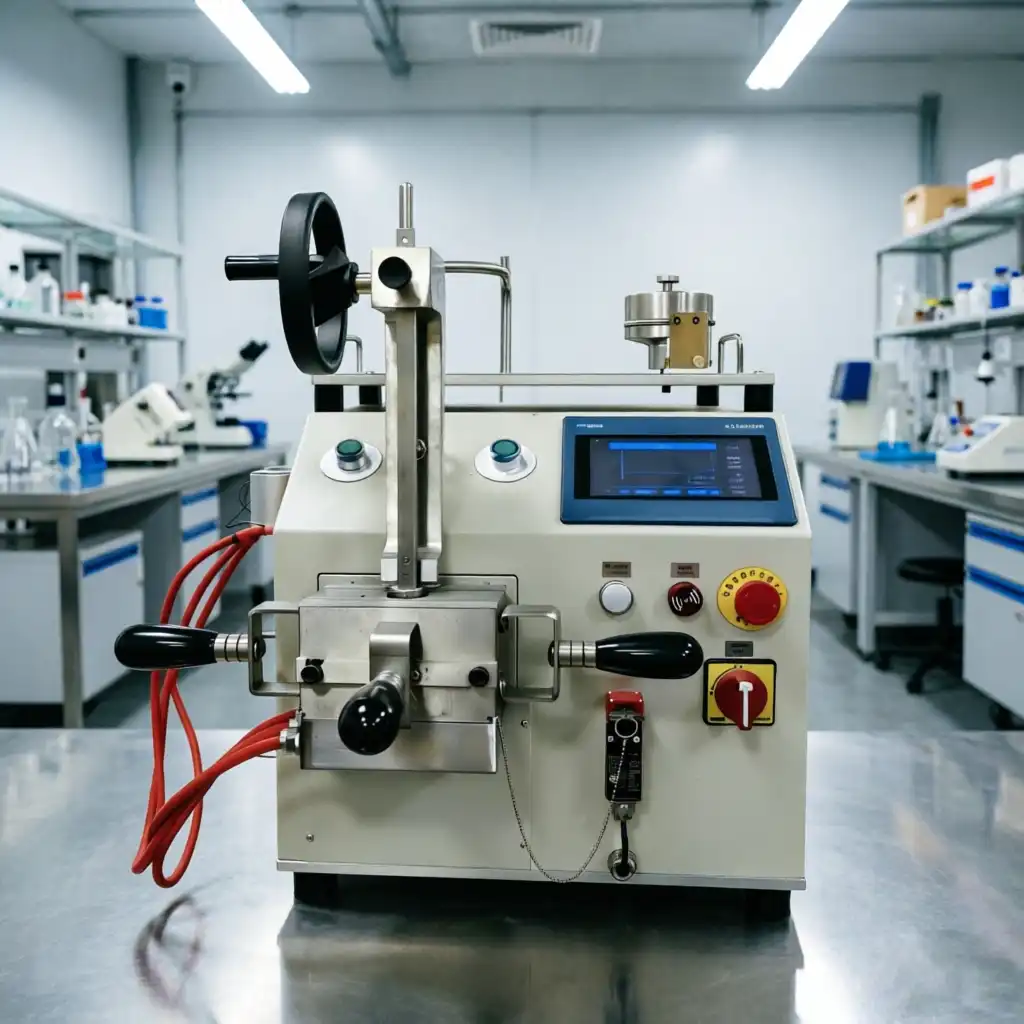
Hartek’s small-scale internal mixer, with its three core technologies—multi-rotor options, wide-range temperature control, and wear-resistant materials—achieves comprehensive compatibility with a full range of polymer materials and blending systems.
Packaging and Masterbatch: Dispersion and blending of white, black, and colored masterbatches, as well as formulation development of functional masterbatches such as high-filler masterbatches, antistatic masterbatches, and flame-retardant masterbatches. The white masterbatch uses high-quality titanium dioxide and carrier resin, exhibiting excellent dispersibility and no color difference after thorough kneading in the internal mixer, ensuring continuous stability during high-speed film production.
PVC Modification: Plasticization and blending of flexible PVC, rigid PVC, and low-smoke halogen-free cable materials.
PP Blending and Modification: PP/elastomer toughening systems, PP/inorganic filler filling systems, and PP/glass fiber reinforced systems. Melt grafting modification of PP and blending with PC and POE can be completed within the temperature range of 170~200℃ using the internal mixer.
Specialty Rubber Formulations: Plasticizing, mixing, and filler dispersion of various rubbers including natural rubber (NR), styrene-butadiene rubber (SBR), nitrile rubber (NBR), ethylene propylene diene monomer (EPDM), and silicone rubber. Suitable for formulation development of rubber tires, automotive sealing strips, and hoses.
Functional Masterbatches and High-Filler Systems: Functional masterbatches such as conductive, thermally conductive, flame-retardant, and antibacterial masterbatches, as well as high-filler masterbatches such as calcium carbonate, talc, and titanium dioxide. Internal mixers are particularly effective at dispersing pigments and fillers that are difficult to disperse.
Specialty Materials: Nanocomposites, carbon nanotube reinforced systems, graphene composites, magnetic materials, ceramic powder mixing (mixing and dispersion of metal and ceramic powders), and high-viscosity composite systems such as alloy materials.
Hartek internal mixers are available in various capacities, including 55ml, 200ml, and 300ml, with models such as HTK-55, HTK-200, and HTK-300 meeting R&D needs ranging from micro-batch to small-batch production. Rotor types can be selected based on materials and processes: Roller, Banbury, Cam, and Sigma, matching the optimal shearing strategy. Temperature control accuracy is ±1℃, with a maximum operating temperature of up to 450℃ (optional), and a compressed air forced cooling system is included.
 English
  Arabic
  German
  Spanish
  French
  Russian